

Holy Week in Cusco is one of the most important religious celebrations in Peru. Every year, thousands of locals and visitors gather in the historic center to witness ancient traditions, solemn processions, and unique cultural rituals that combine Catholic faith with Andean heritage.
In 2026, Holy Week will take place in late March and early April, transforming the city into a vibrant stage of devotion, music, and tradition. The celebrations include palm blessings, historic processions, traditional food, and emotional moments like the famous Lord of the Earthquakes procession.
For travelers, experiencing Semana Santa in Cusco is a unique opportunity to see one of the most authentic religious festivals in South America.
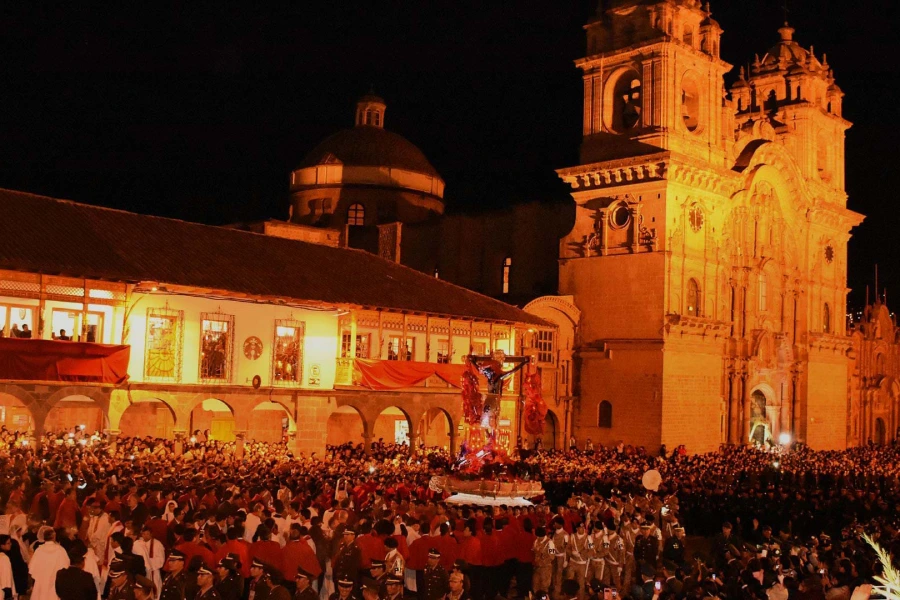
Crowds gathered in Cusco’s Plaza de Armas during Holy Week celebrations.
When is Holy Week in Cusco 2026?
In 2026, Holy Week will be celebrated between March 29 and April 5.
Main dates:
| Day | Date 2026 | Main Event | Where to Experience It |
|---|---|---|---|
| Palm Sunday | March 29 | Blessing of Palm Crosses | Cusco Cathedral |
| Holy Monday | March 30 | Lord of the Earthquakes Procession | Main Square (Plaza de Armas) |
| Holy Thursday | April 2 | Seven Churches & Twelve Dishes | Historic Center |
| Good Friday | April 3 | Religious ceremonies | Cusco churches |
| Easter Sunday | April 5 | Celebration of the Resurrection | Cathedral and local churches |
Timeline of Holy Week in Cusco
Understanding the timeline helps visitors plan their trip and not miss the most important celebrations.
Palm Sunday (Domingo de Ramos)
Palm Sunday marks the beginning of Holy Week.
In Cusco, many people attend mass carrying palm crosses made with palm leaves, rosemary, and local plants.
“
When I attended Palm Sunday mass in Cusco, I brought a palm cross woven with rosemary and other herbs. During the ceremony, the priest blesses these crosses, and many families later place them inside their homes. Locals believe the blessed palm crosses help protect the household throughout the year.
”
This tradition is deeply rooted in Cusco’s religious culture and can be seen throughout churches across the city.
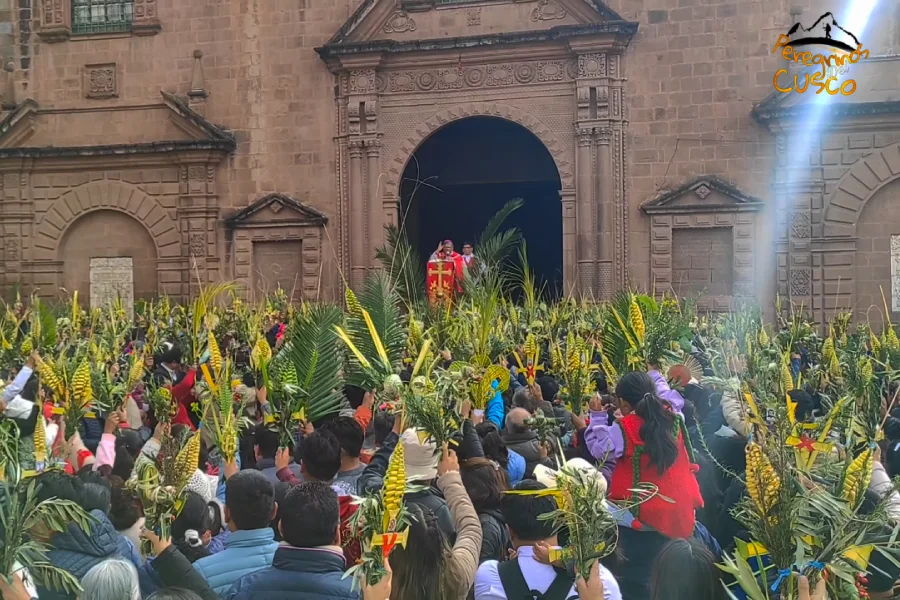
People attending Palm Sunday mass in Cusco carrying traditional palm crosses for the blessing.
Holy Monday – The Lord of the Earthquakes Procession
One of the most important events of Holy Week is the procession of the Lord of the Earthquakes (Señor de los Temblores), the patron saint of Cusco.
The procession takes place on Holy Monday and attracts thousands of faithful believers.
In the afternoon, the image of Christ is carried from the Cusco Cathedral through the Plaza de Armas and the historic center.
“
When I witnessed this procession, the atmosphere was incredibly emotional. Thousands of people filled the square while others threw ñucchu flowers, a red Andean flower traditionally offered during the procession.
Many people pray as the image passes by, creating a powerful moment of devotion and community.
Because of its importance, the historic center becomes extremely crowded. If you want a good view, it is best to arrive early in the afternoon.”
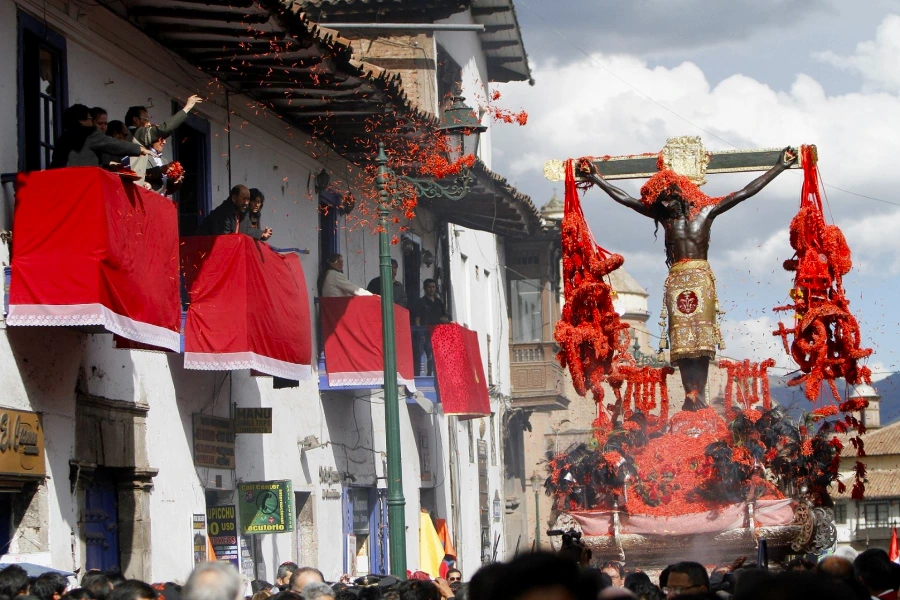
The Lord of the Earthquakes procession, one of the most important events of Holy Week in Cusco.
Holy Thursday Traditions
Holy Thursday is another day full of traditions in Cusco.
Visiting the Seven Churches
One popular tradition is the visit to the seven churches. Locals walk through the historic center visiting different colonial temples to pray and reflect.
Some of the most visited churches include:
- Cusco Cathedral
- La Compañía de Jesús
- San Blas Church
- San Francisco Church
- Santo Domingo Church
This route allows visitors to explore the beautiful colonial architecture and religious heritage of Cusco.
The Tradition of the Twelve Dishes
Another important tradition of Holy Thursday is the twelve-dish meal.
In many Cusco homes and restaurants, families prepare twelve traditional dishes, usually made with fish and seafood, since eating red meat is avoided during this day.
“
When I learned about this tradition, I noticed that many families gather together to share these meals, turning it into both a religious and cultural celebration.
”
Typical dishes may include:
- Quinoa soup
- Seafood rice
- Corn dishes
- Traditional desserts (mazamorra, rice pudding, peach stew)
- Others
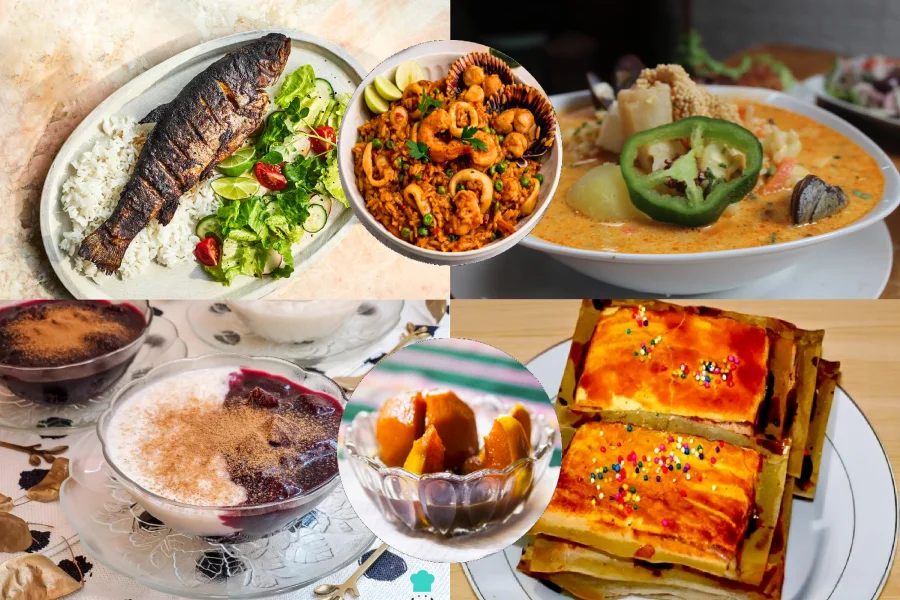
Traditional dishes prepared during Holy Week in Cusco.
Good Friday (Viernes Santo)
Good Friday is a more solemn day in Cusco.
Churches hold special masses and religious ceremonies remembering the crucifixion of Christ. Many locals spend the day in prayer or attending church services.
Although fewer processions take place, the spiritual atmosphere in the city remains very strong.
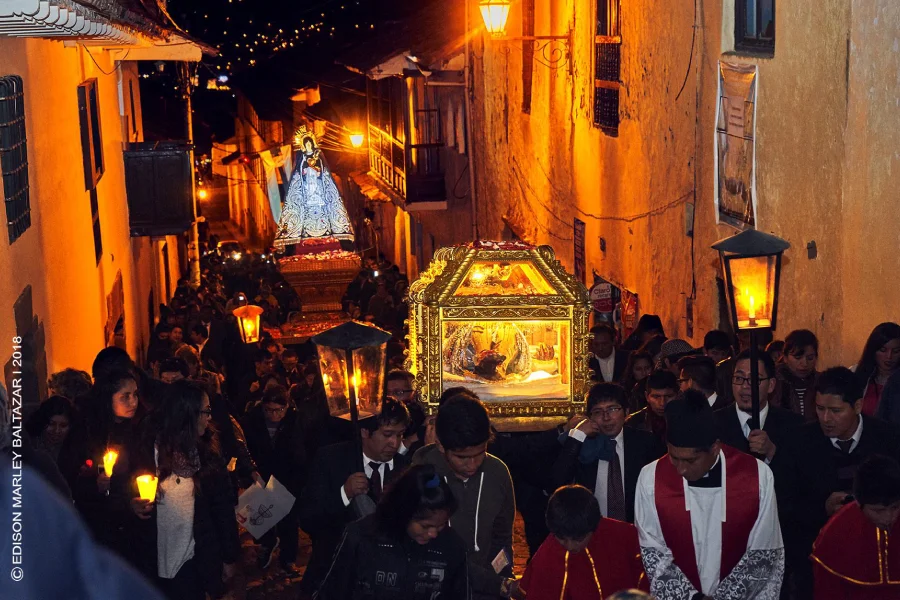 Holy Week procession walking through the historic streets of Cusco.
Easter Sunday (Domingo de Resurrección)
Easter Sunday celebrates the resurrection of Christ.
Churches hold festive masses, and families gather together to celebrate the end of Holy Week.
For visitors, it is also a great day to explore Cusco since many celebrations move from solemn ceremonies to joyful gatherings.
Traditional Food During Holy Week
Food plays an important role during Holy Week in Cusco.
Because many people avoid red meat, traditional meals include fish, seafood, and vegetarian dishes.
Some of the most common foods include:
- shrimp soup
- lisas and quinoa soup
- corn-based dishes
- traditional sweets
Restaurants throughout the historic center often offer special menus for the celebration.
Tips for Visiting Cusco During Holy Week
If you plan to visit Cusco during Semana Santa, keep these tips in mind.
Arrive early for processions
Major events like the Lord of the Earthquakes procession attract
thousands of people.
Book hotels in advance
Holy Week is one of the busiest travel periods in Cusco.
Expect large crowds
The historic center, especially the Main Square (Plaza de Armas), becomes very crowded.
Respect local traditions
Remember that Holy Week is a deeply religious celebration for many locals.
Why Holy Week in Cusco Is Unique
Holy Week in Cusco is not just a religious event. It is a celebration that reflects the fusion of Spanish Catholic traditions and Andean culture.
From the blessing of palm crosses to the emotional procession of the Señor de los Temblores, every event shows the deep cultural identity of the city.
For travelers, it offers a rare opportunity to witness a celebration that has been preserved for centuries.
Conclusion
Holy Week in Cusco is one of the most meaningful cultural and religious celebrations in Peru. With centuries-old traditions, emotional processions, and unique local customs, the city offers visitors an unforgettable experience.
Whether you attend the blessing of palm crosses, witness the Lord of the Earthquakes (Señor de los Temblores) procession, or try traditional Holy Week dishes, Semana Santa in Cusco provides a deep insight into the spiritual and cultural life of the Andes.
Would you like to experience Holy Week in Cusco? If you are planning to visit Cusco during Holy Week and would like to learn more about local traditions or experiences, feel free to contact us.