

When I walk through the ancient streets of Cusco, I often try to imagine what this city looked like over 500 years ago. Beneath the colonial buildings lies the heart of the Inca Empire, the most powerful civilization in South America, known in Quechua as the Tahuantinsuyo.
If you are planning a trip to Peru, understanding the history of the Inca Empire will completely transform your experience when visiting iconic sites like Machu Picchu, Sacsayhuaman, and the Sacred Valley.
This is not just ancient history. It’s a living culture that you can still feel in the language, traditions, and landscapes of the Andes today.
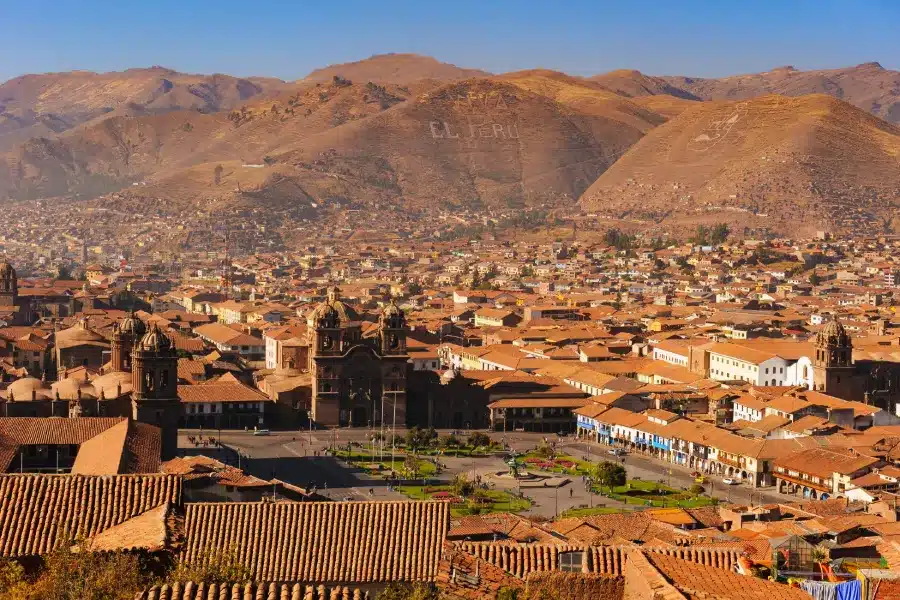
Panoramic view of Cusco historic center, heart of the ancient Inca capital.
What Was the Inca Empire?
The Inca Empire was the largest empire in pre-Columbian America. At its peak in the 15th and early 16th centuries, it extended across modern-day Peru, Bolivia, Ecuador, southern Colombia, northern Chile, and northwest Argentina.
The empire was called Tahuantinsuyo, meaning “The Four United Regions”:
- Chinchaysuyo
- Antisuyo
- Contisuyo
- Collasuyo
Its capital was Cusco, considered the “navel of the world”.
From here, the Incas developed an advanced administrative system, agricultural innovations, and an extraordinary road network that connected thousands of kilometers across the Andes.
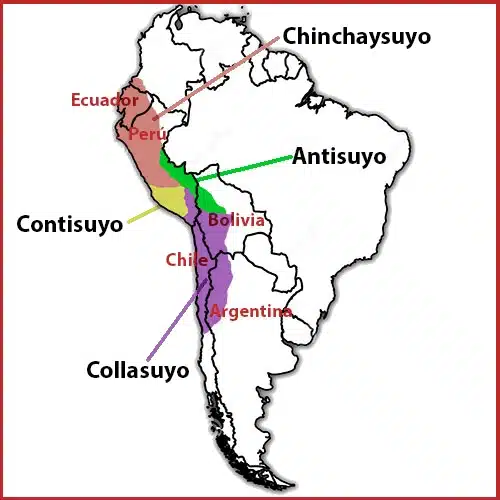
Map of the Inca Empire at its greatest territorial expansion.
When Did the Inca Empire Begin and End?
The Inca Empire began in the early 13th century, when a small ethnic group settled in the Cusco Valley. However, it was during the reign of Pachacútec in the 15th century that the empire rapidly expanded and became the most powerful civilization in South America.
The empire officially ended in 1532, when Spanish conquistadors led by Francisco Pizarro captured the Inca emperor Atahualpa. Although the political structure collapsed, Inca culture and traditions survived and remain alive in the Andes today.
The Andean Cosmovision: The Three Realms of the Universe
One of the most fascinating aspects of Inca culture is their Andean worldview, which divided the universe into three interconnected realms.
Hanan Pacha – The Upper World
The celestial realm, home of the gods, including Inti (the Sun).
Symbol: The Condor.
Kay Pacha – The World of the Living
The earthly realm where humans live.
Symbol: The Puma.
“
Interestingly, Cusco was designed in the shape of a puma — something I always find incredible when walking through the city.
”
Uku Pacha – The Inner World
The underworld associated with ancestors, the earth, and rebirth.
Symbol: The Serpent.
This spiritual structure influenced Inca architecture, city planning, and ceremonies. Many temples were astronomically aligned, reflecting their deep connection with nature and the cosmos.
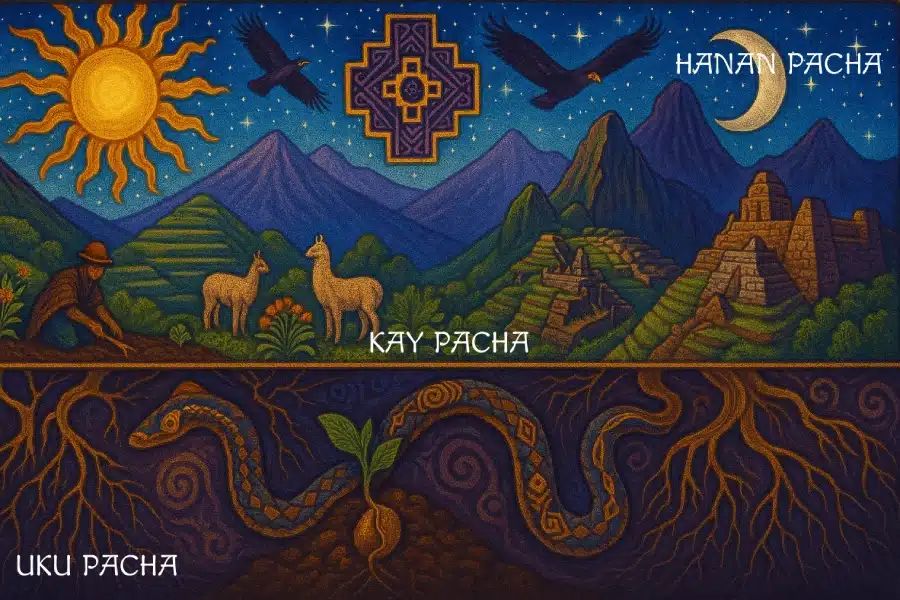
The Andean Cosmovision: spiritual structure of the Inca world.
The Main Gods of the Inca Empire
Religion was at the center of daily life in the Inca Empire. The Incas believed that nature, the cosmos, and human life were deeply interconnected. Their religion was polytheistic, meaning they worshiped multiple gods — most of them closely tied to natural forces.
When I visit sacred sites around Cusco, I always try to imagine how these places were once filled with ceremonies dedicated to powerful deities who governed the sun, earth, sky, and creation itself.
Below are the most important gods of the Inca Empire.
Inti – The Sun God
Inti was the most important deity in the Inca religion. He was the Sun God and protector of the empire.
The Sapa Inca (the emperor) was believed to be Inti’s direct descendant, which reinforced his political and spiritual authority.
The most important temple dedicated to Inti was the Coricancha in Cusco, once covered in sheets of gold. Even today, the Inti Raymi festival reenacts ancient ceremonies honoring the Sun God.
Viracocha – The Creator God
Viracocha (also spelled Wiracocha) was considered the supreme creator god.
According to Inca mythology, Viracocha created the heavens, the earth, the sun, the moon, and humanity. He was associated with wisdom and cosmic order.
Although Inti was central to state worship, Viracocha represented the deeper origin of existence itself.
Pachamama – Mother Earth
Pachamama is one of the most enduring Andean deities.
She represents Mother Earth — fertility, agriculture, and life itself. Even today, many Andean communities perform offerings (despachos) to Pachamama before planting crops or beginning important journeys.
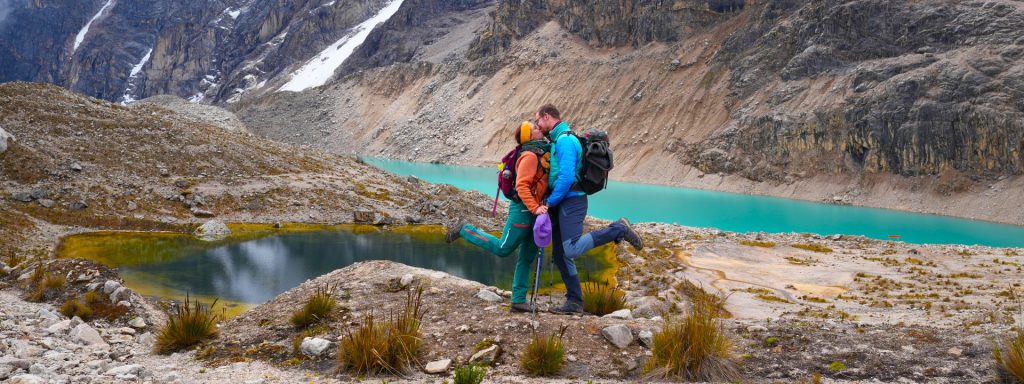
When trekking in the Andes, especially near sacred mountains and lagoons, you can still witness this spiritual connection to the land.
Illapa – God of Thunder and Weather
Illapa was the god of thunder, lightning, and rain.
In an agricultural empire that depended on crops like maize and potatoes, weather control was essential. Illapa was both feared and respected because storms could either nourish the land or destroy harvests.
Mama Quilla – The Moon Goddess
Mama Quilla was the Moon Goddess and wife of Inti.
She was associated with timekeeping, calendars, and feminine cycles. The Incas used lunar phases to organize agricultural and ceremonial events.
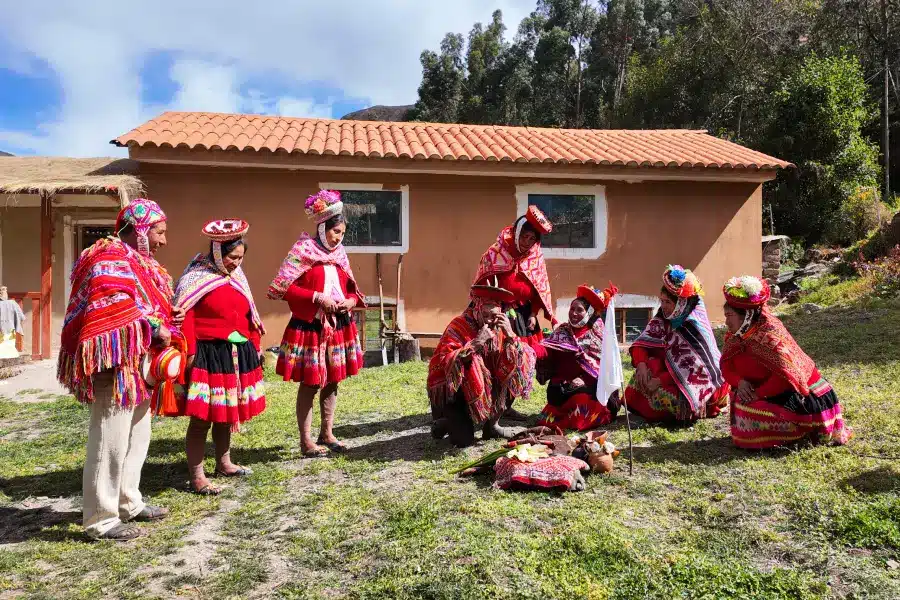
Traditional Andean ceremony honoring Pachamama (Mother Earth).
How Inca Religion Influenced Architecture and Travel Sites Today
Understanding the main Inca gods helps explain why certain places were built where they were.
Many temples were aligned with:
- Solar solstices
- Mountain peaks (Apus)
- Sacred rivers
- Agricultural cycles
Sites like Machu Picchu were not randomly placed. They reflected a deep spiritual relationship between humans, mountains, and the cosmos.
When you stand at these archaeological sites, you’re not just looking at stone structures — you’re standing inside a sacred worldview.
How Did the Incas Build Without Modern Technology?
One of the greatest mysteries of the Inca Empire is how they constructed massive stone structures without iron tools, wheels, or modern machinery.
The Incas shaped stones using harder stones as hammers and polished them until they fit together with incredible precision, without the use of mortar. This technique, known as ashlar masonry, allowed buildings to withstand earthquakes, which are common in the Andes.
Large stones were transported using ramps, ropes, and human labor through the mita system. When you see walls at Sacsayhuamán or Machu Picchu, you’re witnessing engineering knowledge that was centuries ahead of its time.
Most Important Inca Sites You Can Visit Today
Understanding the Inca Empire becomes truly powerful when you stand in the places they built.
Machu Picchu – The Lost City of the Incas
Probably the most iconic archaeological site in South America, Machu Picchu was built in the 15th century and later abandoned during the Spanish conquest.
Located at 2,430 meters (7,970 feet) above sea level, Machu Picchu was likely built as a royal estate for the Inca emperor Pachacútec in the 15th century. Its remote mountain setting protected it from Spanish destruction, which is why it remains so well preserved today.
In 1983, Machu Picchu was declared a UNESCO World Heritage Site, and in 2007 it was named one of the New Seven Wonders of the World. Its precise stonework, agricultural terraces, and astronomical alignments continue to amaze archaeologists and travelers alike.
“
Every time I visit, I’m amazed by its engineering precision and its dramatic location between mountain peaks.
”
If you’re planning to visit Machu Picchu, I recommend exploring it as part of a guided trekking experience that follows ancient Inca routes.
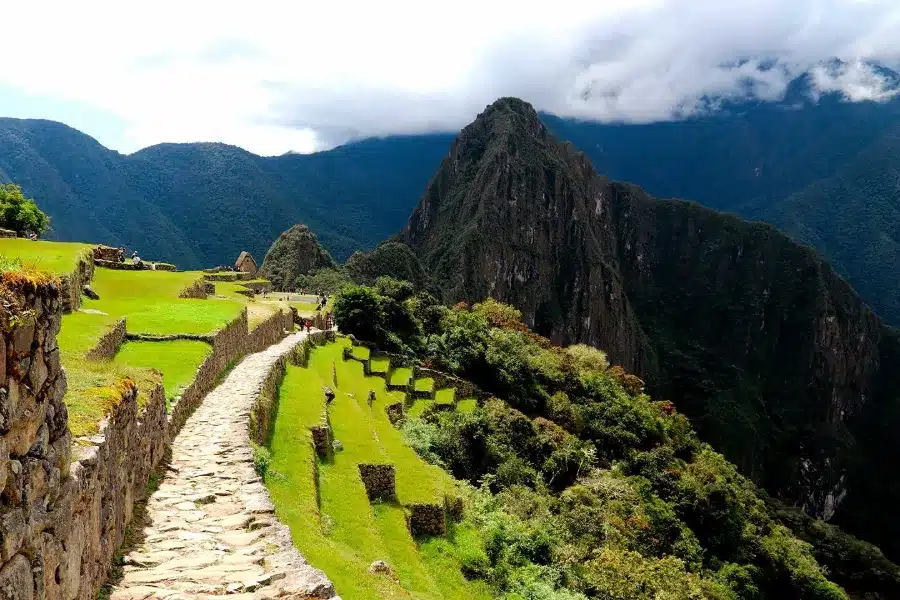
Panoramic view of Machu Picchu, the Lost City of the Incas.
Sacsayhuamán – The Megalithic Wonder
Located just above Cusco, Sacsayhuamán is famous for its enormous stone blocks fitted together without mortar. Some weigh over 100 tons.
Seeing it in person makes you question how such precision was achieved centuries ago.
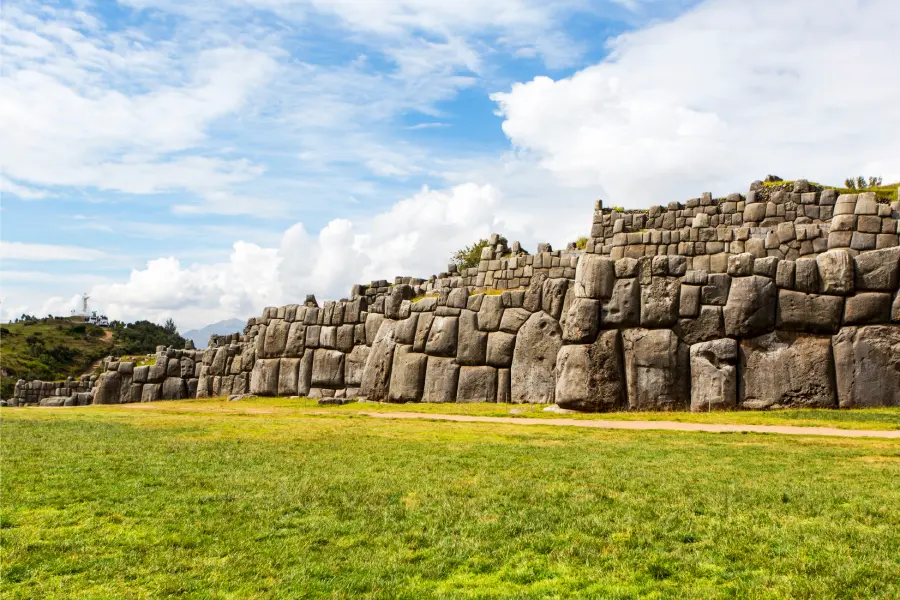
Sacsayhuamán archaeological site, a masterpiece of Inca engineering.
Qhapaq Ñan – The Great Inca Road System
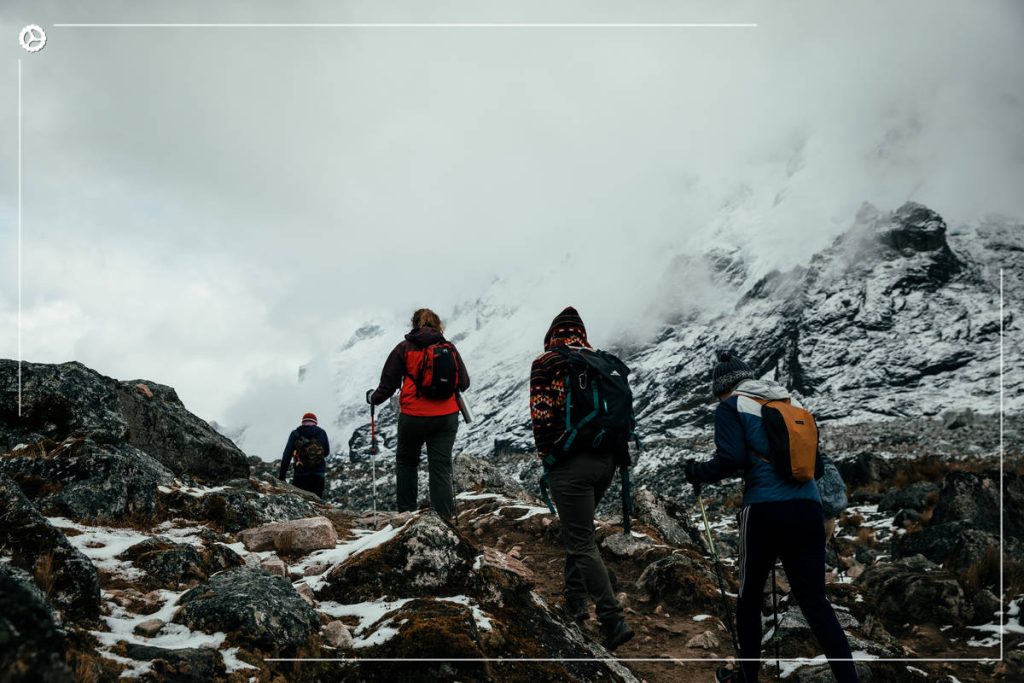
The Inca road network connected the entire empire. Today, travelers can hike sections of it, including the famous Inca Trail to Machu Picchu.
Walking these paths gives you a real sense of how vast and organized the empire once was.
Parts of the ancient Qhapaq Ñan can still be explored today through multi-day trekking routes in the Andes.
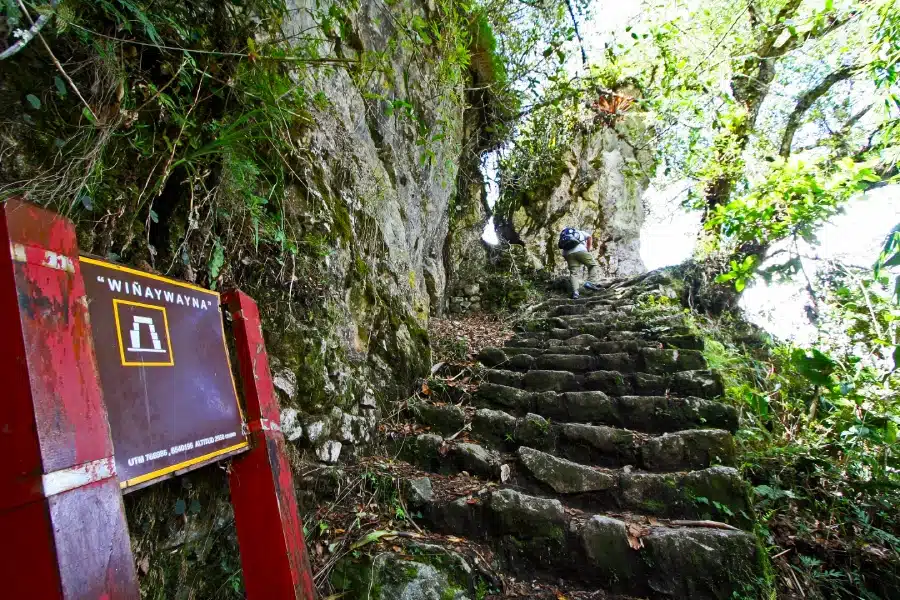
Trail to Wiñay Wayna along the classic Inca Trail.
The Fall of the Inca Empire
In 1532, Spanish conquistadors led by Francisco Pizarro captured the Inca ruler Atahualpa, marking the beginning of the empire’s collapse.
The empire was already weakened by a civil war between Atahualpa and Huáscar, which made the Spanish conquest easier.
However, while the political empire fell, the culture survived. Today, Quechua language, traditions, and Andean spirituality remain alive.
Why Understanding the Inca Empire Will Transform Your Trip
In my experience, visiting Cusco without understanding the Inca Empire is like reading only the last page of a book.
When you know:
- The meaning of Tahuantinsuyo
- The three realms: Hanan Pacha, Kay Pacha, Uku Pacha
- Why Cusco was sacred
- How Machu Picchu was strategically built
Your trip becomes deeper, more meaningful, and far more memorable.
You’re not just visiting ruins. You’re stepping into one of the greatest civilizations in history.
“
Don’t visit Inca sites without understanding their history and spiritual meaning — knowing about the three Andean realms (Hanan Pacha, Kay Pacha, and Uku Pacha) will completely transform your experience.
”
Experience the Inca Legacy in Person
Reading about the Inca Empire is fascinating — but walking through its landscapes is something completely different.
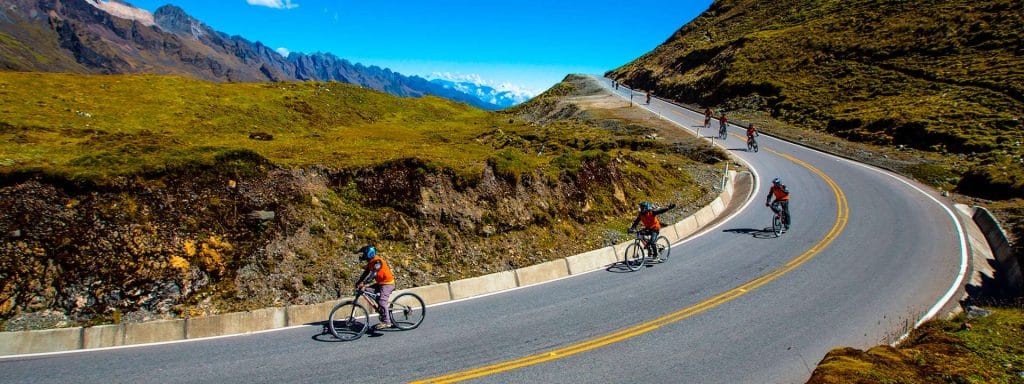
Whether you choose a classic Machu Picchu visit, an Inca trail trek, or a journey to high-altitude sacred lagoons, experiencing these places in person gives you a deeper understanding of Andean history and spirituality.
Conclusion
The Inca Empire was not only the largest civilization in pre-Columbian America — it was also one of the most sophisticated in engineering, agriculture, administration, and spirituality.
From the sacred design of Cusco to the breathtaking beauty of Machu Picchu, the Inca legacy is still visible throughout Peru.
“
History in Cusco is not something you only read about — it’s something you walk through.
Explore Machu Picchu, the Sacred Valley, and ancient Inca trails with Conde Travel, and discover the deeper meaning behind every stone, mountain, and sacred site.
”
Looking for a recommended itinerary? Contact us, and we will suggest a 5, 7, or 10-day route based on your interests (culture, nature, adventure, or photography).