

Traditional Inca food dishes are more than just meals—they are a living connection to one of the most fascinating civilizations in history. Many of these dishes are still prepared today in Peru, especially in the Andes around Cusco, where culinary traditions have been preserved for centuries.
As local operators, we’ve seen that trying these foods is often one of the most memorable parts of visiting Cusco. Understanding what the Incas ate not only enriches your cultural experience but also helps you connect more deeply with the region.
If you want to understand what the Incas ate—and what you can still try today—this guide covers everything from staple ingredients to traditional dishes that remain popular.
What Did the Incas Eat? A Simple Guide to Inca Food
The Inca diet was based on locally available, highly nutritious ingredients. Without modern technology, the Incas developed a sustainable food system adapted to the Andes.
Their daily diet included:
- grains like quinoa
- tubers such as potatoes
- corn (maize)
- meat from animals like llama and cuy
These ingredients form the foundation of many traditional Inca food dishes still eaten today.
Staple Ingredients That Shaped Inca Food
Quinoa: The Sacred Grain
Quinoa was considered sacred by the Incas and remains one of the most important foods in Peru today. It is rich in protein and highly adaptable to high-altitude conditions.
Today, quinoa is used in soups, stews, and even modern fusion dishes.
Potatoes: The Foundation of Andean Diet
The Andes are the birthplace of potatoes, with thousands of varieties cultivated by the Incas.
They developed preservation techniques like chuño (freeze-dried potatoes), allowing long-term storage.
Corn (Maize): A Cultural Staple
Corn was essential not only as food but also for ceremonies. It was used to make chicha de jora, a traditional fermented drink still consumed today.
Protein Sources in the Inca Diet
Guinea Pig (Cuy): A Traditional Delicacy
Cuy has been eaten in the Andes for centuries and remains a traditional dish today.
It is usually roasted and served whole, offering a unique cultural and culinary experience.
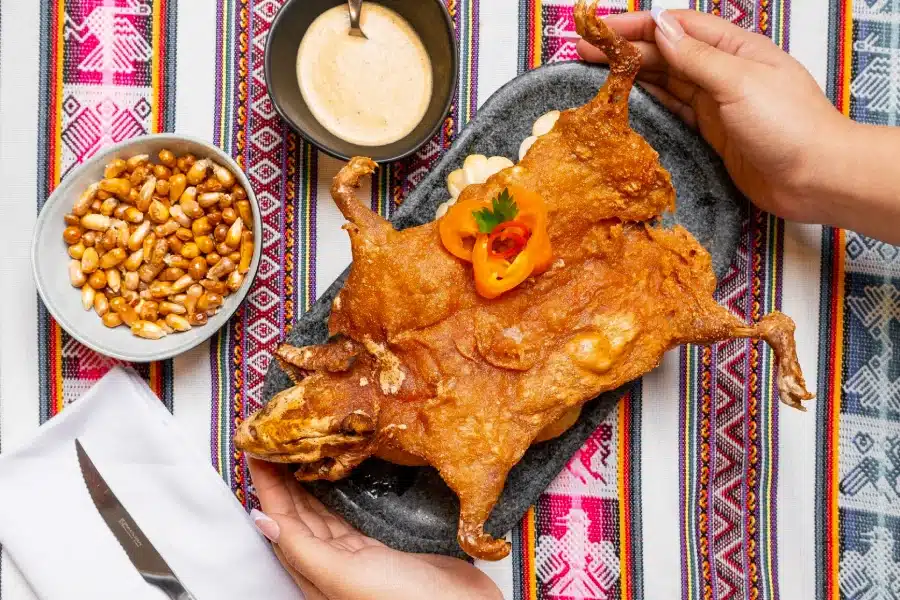
Roasted cuy, one of the most iconic traditional dishes in the Andes
Llama and Alpaca Meat
These animals were essential to Inca life. Their meat is lean and rich in protein, and it is still used in traditional dishes.
Fish and River Resources
In coastal and river regions, fish were an important protein source. Even today, dishes like fried pejerrey reflect this tradition.
What Traditional Inca Food Tastes Like (Real Experience)
Traditional Inca food dishes are simple but flavorful. The focus is on natural ingredients rather than heavy seasoning.
From our experience, travelers often notice:
- earthy flavors from potatoes and grains
- mild, natural seasoning
- hearty textures that feel filling and nourishing
It’s a cuisine that reflects the environment—simple, nutritious, and deeply connected to nature.
Traditional Inca Food Dishes You Can Still Eat Today
Traditional Inca food dishes are not just historical—they are still part of daily life in the Andes. What makes them special is the combination of simple ingredients, ancestral cooking techniques, and deep cultural meaning.
Here are some of the most representative dishes you can still try today:
1. Quinoa-Based Dishes
Quinoa continues to be one of the most versatile ingredients in inca food, used in both savory and sweet dishes.
- Quinoa soup: Prepared with vegetables, herbs, and sometimes meat. Warm, filling, and highly nutritious.
- Quinoa chaufa: A variation of fried rice made with quinoa, mixed with vegetables, eggs, and seasonings.
- Pesque de quinua: A creamy dish made with quinoa, milk, butter, and cheese.
- Quinoa mazamorra: A sweet dessert with quinoa, fruits, and spices.
In my experience, trying these dishes was one of the highlights—they all had different textures, but were equally satisfying.
Tip: Quinoa dishes are a great starting point if you want to explore Inca food in a healthy and accessible way.
2. Roasted Cuy (Guinea Pig)
Roasted cuy is one of the most iconic traditional Inca food dishes.
Historically, cuy was reserved for special occasions and ceremonies. Today, it is still served during celebrations and in traditional restaurants.
Ingredients:
- whole guinea pig
- herbs and spices
- potatoes or corn (side dishes)
Preparation:
The cuy is seasoned and roasted until the skin becomes crispy while the meat stays tender.
For many visitors, trying cuy is more about the cultural experience than the taste.
You might also be interested in → 4 Traditional Guinea Pig (Cuy) Dishes You Should Try in Peru
3. Pachamanca
Pachamanca is one of the most authentic and ancient cooking traditions in Peru.
The name comes from Quechua and means “earth oven.” It was traditionally prepared for community gatherings and rituals honoring nature.
Ingredients:
- meat (chicken, pork, lamb)
- potatoes
- corn
- herbs
Preparation:
All ingredients are placed in a pit in the ground and cooked with hot stones, then covered with earth to trap the heat.
This is one of the clearest examples of how traditional Inca food dishes connect people with the land.
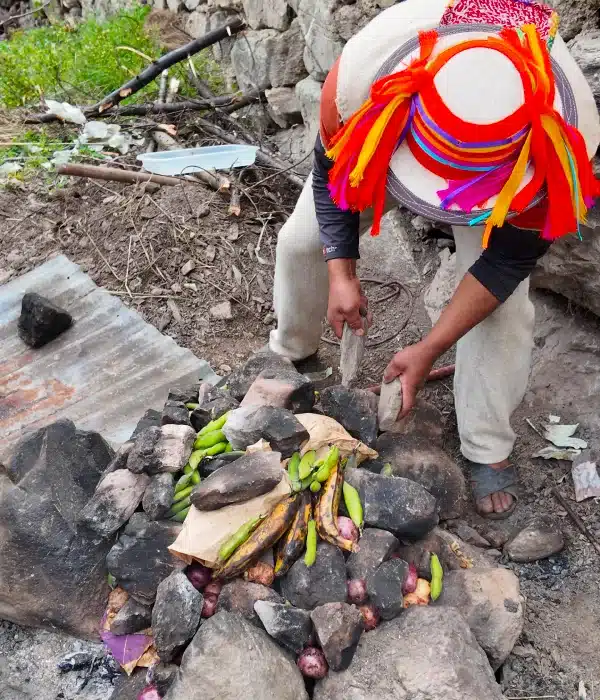
Traditional pachamanca prepared using ancestral Andean cooking techniques
4. Chicha de Jora
Chicha de jora is a traditional fermented drink made from corn.
It played an important role in Inca ceremonies and social gatherings. Today, it is still consumed in rural areas and local festivals.
Ingredients:
- fermented maize
- water
Preparation:
The corn is fermented over several days, creating a mildly alcoholic beverage.
Its taste is slightly sour and unique—very different from modern drinks.
Where to Try Inca Food in Cusco
If you want an authentic experience, Cusco is one of the best places to try traditional Inca food dishes.
A great starting point is San Pedro Market, where you can find local soups, fresh ingredients, and traditional meals at affordable prices.
You can also explore local restaurants that specialize in Andean cuisine, often combining tradition with modern presentation.
“
Travelers often describe quinoa soup as warm, comforting, and perfect for Cusco’s altitude.
”
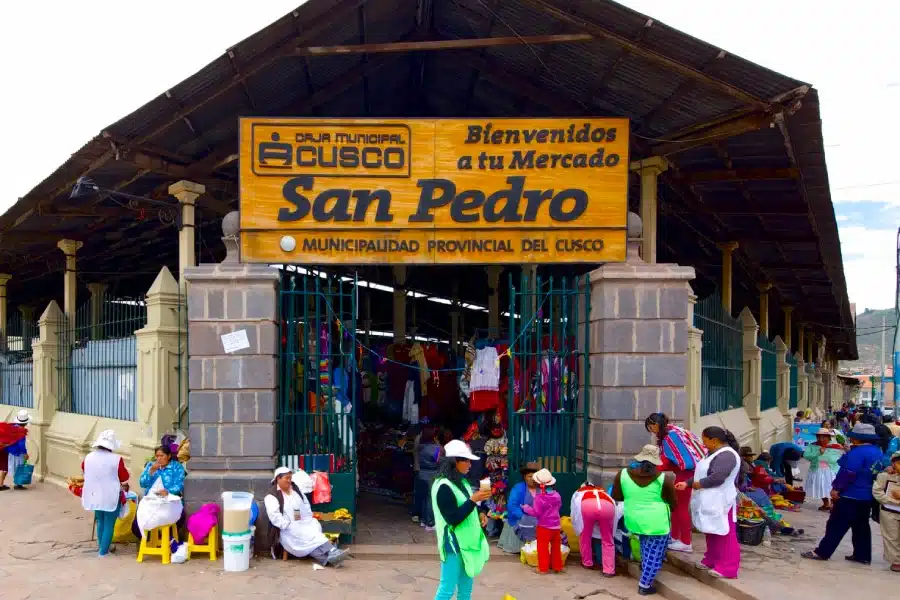
Traditional Andean ingredients and local dishes at San Pedro Market in Cusco
How Inca Food Was Prepared in Ancient Times
The Incas used natural cooking techniques adapted to their environment.
These included:
- cooking with hot stones
- drying and preserving food
- underground ovens (as in pachamanca)
These methods allowed them to store and prepare food efficiently without modern tools.
Is Inca Food Healthy?
Yes—traditional Inca food is considered very healthy.
It is based on:
- natural ingredients
- high nutritional value
- minimal processing
Quinoa, potatoes, and Andean grains are now recognized worldwide as superfoods.
Why Inca Food Is Still Popular Today
Traditional Inca food dishes remain popular because they are:
- nutritious
- culturally significant
- part of everyday life in the Andes
Tourism has also helped preserve these traditions, as more travelers seek authentic culinary experiences.
Tips for Trying Inca Food in Cusco
If it’s your first time:
- Start with soups or quinoa dishes
- Visit local markets for authenticity
- Be open to new flavors
- Ask locals for recommendations
Taking it step by step makes the experience more enjoyable.
“
Want to experience traditional Inca food dishes in Cusco?
Explore local markets, cultural tours, and authentic Andean meals as part of your journey. Contact us!
”