
The Inca Trail is considered a moderately challenging trek, with the difficulty depending on factors such as altitude, terrain, physical preparation, and the route you choose.
The Classic Inca Trail (4 days) is the more demanding option, reaching Dead Woman’s Pass at 4,215 m (13,828 ft) and requiring several days of continuous hiking. The Short Inca Trail (2 days) is a shorter alternative with fewer physical demands while still offering the unforgettable experience of reaching Machu Picchu through the Sun Gate (Inti Punku).
You do not need previous trekking experience to complete the Inca Trail, but proper acclimatization, preparation, and a realistic understanding of the route are essential. This guide explains the main challenges, compares both routes, and helps you choose the best option for your adventure.
Inca Trail Difficulty at a Glance
| Category | Details |
|---|---|
| Overall Difficulty | Moderate to challenging |
| Classic Inca Trail Duration | 4 days / 3 nights |
| Short Inca Trail Duration | 2 days / 1 night |
| Classic Route Distance | Approximately 43 km / 26 miles |
| Short Route Distance | Approximately 12 km / 7.5 miles (first day) |
| Highest Point | Dead Woman’s Pass – 4,215 m (13,828 ft) |
| Main Challenges | Altitude, stone steps, steep climbs, long hiking days |
| Recommended Preparation | Walking, endurance training, and altitude acclimatization |
Why Is the Inca Trail Considered Difficult?
The Inca Trail is not difficult because of one single challenge. The experience becomes demanding because of the combination of high altitude, uneven terrain, changing weather, and several consecutive days of hiking in the Andes.
While many travelers successfully complete the route every year, understanding these factors beforehand will help you prepare better and enjoy the journey more comfortably.
1. Altitude: The Biggest Challenge for Many Hikers
Altitude is one of the main reasons why the Inca Trail can feel challenging.
The highest point of the Classic Inca Trail is Dead Woman’s Pass (Warmiwañusca), located at 4,215 meters (13,828 feet) above sea level. At this elevation, the reduced oxygen levels can make hiking feel more demanding, even for travelers with good physical fitness.
Altitude affects everyone differently. Some hikers adapt quickly, while others may experience fatigue, slower pace, or shortness of breath.
For this reason, spending a few days in Cusco or the Sacred Valley before the trek is highly recommended. Allowing your body time to adjust can make a significant difference in your overall experience.
Local Tip: Avoid starting the Inca Trail immediately after arriving in Cusco. Give your body time to adapt to the elevation and use your first days for lighter activities.
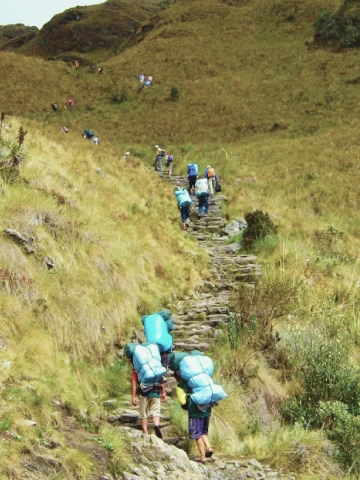
Hiking toward Dead Woman’s Pass on the Classic Inca Trail.
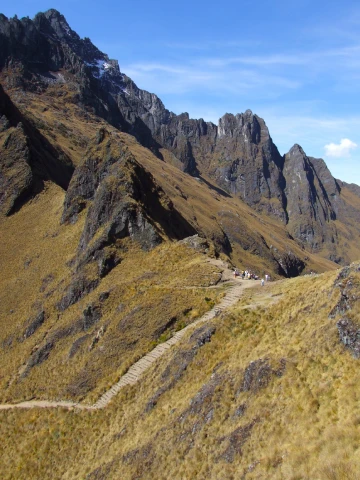
The steep mountain landscape around Dead Woman’s Pass.
2. Stone Steps and Uneven Terrain
One of the most unique aspects of the Inca Trail is also one of its biggest challenges: the original stone pathways built by the Incas.
The route includes thousands of stone steps, uneven surfaces, and sections that require careful footing. The difficulty is not only the uphill climbs but also the long descents, which can be demanding on your legs and knees.
These ancient paths are part of what makes the Inca Trail special, but they also require a steady pace and proper footwear.
3. Long Hiking Days and Physical Endurance
The Inca Trail is a multi-day trek, meaning your body needs to recover and continue hiking each day.
The challenge comes from the accumulation of effort: walking several hours daily, climbing and descending through different landscapes, and adapting to mountain conditions.
The second day of the Classic Inca Trail is usually considered the hardest because of the ascent to Dead Woman’s Pass. However, every day requires endurance and pacing.
4. Weather Conditions Along the Trail
Weather in the Andes can change quickly.
A morning can begin with cold temperatures and later become sunny or rainy depending on the season and elevation. During the rainy season, some sections of the trail can become slippery.
Packing appropriate clothing and wearing suitable hiking shoes can make the trek much more comfortable.
Classic vs Short Inca Trail Difficulty
The Inca Trail is available in different versions, and the difficulty level changes depending on the route you choose. While both options offer the opportunity to reach Machu Picchu through ancient Inca pathways, the physical demands are quite different.
The Classic Inca Trail (4 days) is the more challenging option because of its longer distance, higher altitude, and multiple days of continuous hiking. The Short Inca Trail (2 days) is a shorter alternative with fewer physical demands, making it suitable for travelers who want to experience the famous route with a more relaxed schedule.
Classic Inca Trail Difficulty (4 Days)
The Classic Inca Trail is considered a moderate to challenging trek and is the complete trekking experience to Machu Picchu.
The route covers approximately 43 km (26 miles) over four days and crosses diverse landscapes, from high-altitude mountains to cloud forests near Machu Picchu.
The biggest challenge comes on Day 2, when hikers ascend to Dead Woman’s Pass (Warmiwañusca), the highest point of the trail. This section requires endurance, patience, and proper acclimatization due to the combination of steep climbs and high altitude.
However, the difficulty is not only about reaching the highest point. The accumulated effect of multiple hiking days, stone steps, and changing terrain makes the Classic Inca Trail a demanding but rewarding adventure.
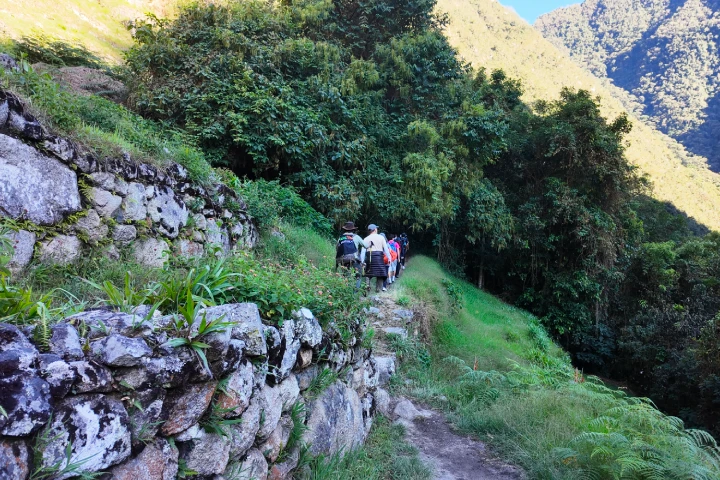
Hiking the Classic Inca Trail through the Andes.
Classic Inca Trail Difficulty Summary
| Factor | Details |
|---|---|
| Duration | 4 days / 3 nights |
| Distance | Approximately 43 km / 26 miles |
| Highest Point | Dead Woman’s Pass – 4,215 m (13,828 ft) |
| Difficulty Level | Moderate to challenging |
| Most Challenging Section | Day 2 ascent to Dead Woman’s Pass |
| Recommended For | Active travelers looking for the complete trekking experience |
Short Inca Trail Difficulty (2 Days)
The Short Inca Trail is considered a moderate trek and is an excellent alternative for travelers who want to experience the famous route with less time and fewer physical demands.
Starting at Km 104, this route covers approximately 12 km (7.5 miles) on the first day and includes some of the most impressive highlights of the trail, including Wiñay Wayna, before reaching Machu Picchu through the Sun Gate (Inti Punku).
Unlike the Classic route, the Short Inca Trail does not include the climb to Dead Woman’s Pass or several days of camping. However, it still involves uphill sections, stone pathways, and several hours of walking.
Although shorter, it should not be considered an easy walk. A basic level of fitness and comfortable walking ability are still recommended.
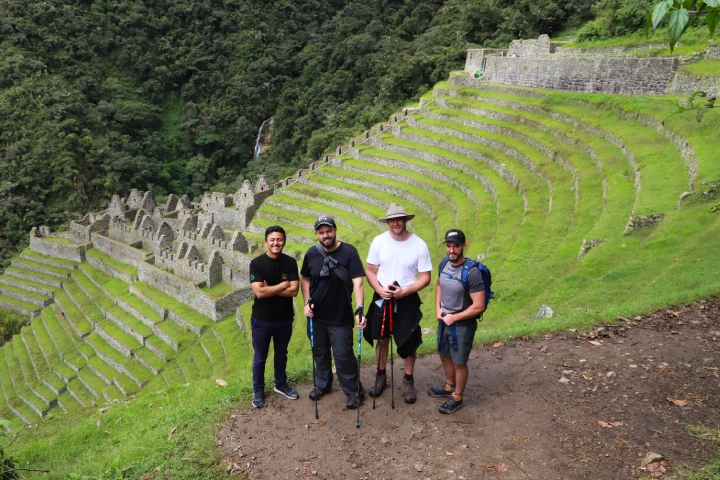
Hikers exploring the Short Inca Trail near Wiñay Wayna.
Short Inca Trail Difficulty Summary
| Factor | Details |
|---|---|
| Duration | 2 days / 1 night |
| Distance | Approximately 12 km / 7.5 miles (first day) |
| Highest Point | Around 2,700 m (8,858 ft) |
| Difficulty Level | Moderate |
| Most Challenging Section | Uphill sections and stone steps near Wiñay Wayna |
| Recommended For | Travelers with limited time or those seeking a shorter trek |
Which Inca Trail Route Is More Difficult?
The Classic Inca Trail is significantly more challenging than the Short Inca Trail because it involves:
- More hiking days.
- Higher altitude.
- Longer distances.
- Camping and adapting to mountain conditions.
- Greater physical endurance.
The Short Inca Trail is the easier option for travelers who want the iconic Inca Trail experience but prefer a shorter adventure.
However, the best choice depends on your travel style, available time, fitness level, and trekking goals.
If you are looking for the easier option, the Short Inca Trail is generally the better choice because it involves fewer hiking hours, lower altitude, and no camping.
Quick Comparison: Classic vs Short Inca Trail
| Category | Classic Inca Trail | Short Inca Trail |
|---|---|---|
| Duration | 4 days | 2 days |
| Difficulty | Moderate to challenging | Moderate |
| Highest Altitude | 4,215 m (13,828 ft) | Around 2,700 m (8,858 ft) |
| Hiking Experience | Full multi-day trek | Shorter trekking experience |
| Camping | Yes | No |
| Best For | Travelers seeking the complete adventure | Travelers with limited time or first-time trekkers |
💡 Did You Know?
The Inca Trail is the only trekking route that allows travelers to enter Machu Picchu through the Sun Gate (Inti Punku) after completing the traditional route on foot.
You might also be interested in: Classic Inca Trail vs Short Inca Trail: Which Trek Is Right for You?
Is the Inca Trail Difficult for Beginners?
One of the most common questions travelers ask before booking the Inca Trail is whether they need previous trekking experience.
The answer is no, you do not need to be an experienced hiker to complete the Inca Trail. However, you should be physically prepared and understand that this is a multi-day mountain trek involving altitude, uneven terrain, and several hours of walking each day.
The Inca Trail is not a technical climb and does not require special mountaineering skills. The main challenges are endurance, adapting to the altitude, and maintaining a steady pace throughout the route.
With proper preparation and acclimatization, many first-time trekkers successfully complete the Inca Trail every year.
Can Beginners Hike the Classic Inca Trail?
Yes, beginners can complete the Classic Inca Trail, as long as they prepare properly.
Previous trekking experience can be helpful, but it is not the most important factor. A traveler who regularly walks, exercises, and prepares before the trek may have a better experience than someone with hiking experience who arrives without proper acclimatization.
The Classic Inca Trail is challenging mainly because of:
- High altitude.
- Long hiking days.
- Steep ascents and descents.
- Limited recovery time between trekking days.
For beginners, the key is not speed but consistency. Maintaining a comfortable pace, taking breaks when needed, and listening to your body can make a significant difference.
Which Inca Trail Route Is Better for First-Time Trekkers?
For travelers who have never completed a multi-day trek, the Short Inca Trail can be an excellent introduction.
It offers many of the highlights that make the route famous:
- Walking along original Inca pathways.
- Visiting the impressive archaeological site of Wiñay Wayna.
- Entering Machu Picchu through the Sun Gate.
- Experiencing part of the legendary Inca Trail.
Because it is shorter and does not reach the same altitude as the Classic route, many first-time trekkers find it more manageable.
However, beginners who are active, properly prepared, and looking for a complete trekking experience can also successfully complete the Classic Inca Trail.
Who Might Find the Inca Trail More Challenging?
The Inca Trail may feel more difficult for travelers who:
- Are not used to walking long distances.
- Rarely hike uphill.
- Arrive in Cusco without enough acclimatization time.
- Underestimate the effects of altitude.
- Carry unnecessary weight during the trek.
Previous hiking experience is helpful, but preparation and pacing usually have a greater impact on the overall experience.
Local Tip: Do not compare your pace with other hikers on the trail.
Altitude affects everyone differently, and some travelers who appear very fit may still need more time to adapt. A slower and consistent rhythm allows you to enjoy the landscapes, archaeological sites, and the experience itself.
How to Prepare for the Inca Trail: Fitness, Training & Acclimatization
Preparing for the Inca Trail does not mean you need to become an expert mountaineer. However, improving your endurance, strengthening your legs, and allowing enough time for altitude acclimatization will make the trek much more enjoyable.
The most important preparation factors are being comfortable with long walks, building physical endurance, and giving your body enough time to adapt to the high altitude before starting the trail.
A well-prepared traveler will not only find the route more manageable but will also have more energy to appreciate the landscapes, archaeological sites, and unique experience of hiking to Machu Picchu.
How Far in Advance Should You Prepare for the Inca Trail?
Ideally, you should begin preparing 6 to 8 weeks before your trek.
The Inca Trail does not require extreme physical training, but your body should be comfortable with:
- Walking several hours a day.
- Hiking uphill sections.
- Descending on uneven terrain.
- Staying active on consecutive days.
Your preparation should focus on improving:
- Cardiovascular endurance.
- Leg strength.
- Balance and stability.
- Overall trekking stamina.
If you already exercise regularly, your preparation period may be shorter. However, travelers with a less active lifestyle should start earlier and increase their activity gradually.
Recommended Preparation for the Inca Trail
Build Your Endurance
Walking and hiking are some of the best ways to prepare because they closely match the demands of the trail.
Try to include:
- Longer walks.
- Uphill routes when possible.
- Stair climbing.
- Hiking with a light backpack.
Gradually increasing distance and elevation will help your body adapt to longer trekking days.
Strengthen Your Legs
The Inca Trail includes many climbs, descents, and stone steps, making leg strength important.
Useful exercises include:
- Squats.
- Lunges.
- Step-ups.
- Calf raises.
These exercises improve stability and help your legs handle repeated uphill and downhill sections.
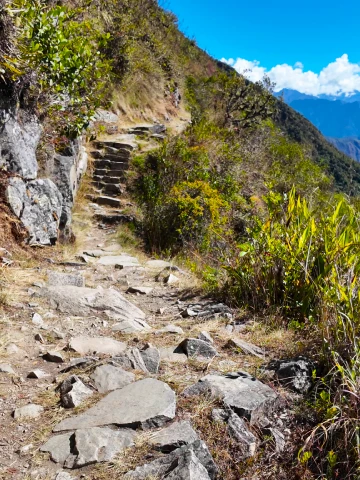
Steep stone steps are one of the challenges of the Inca Trail.
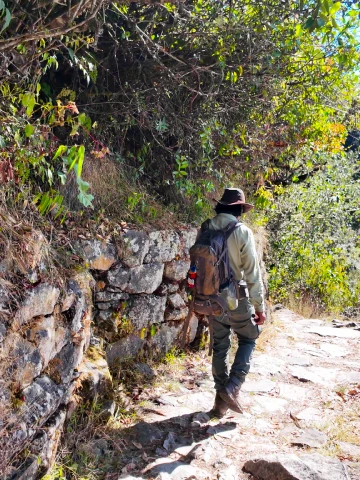
Walking through the ancient stone pathways of the Inca Trail.
Acclimatization: Preparing for High Altitude
Altitude is one of the most important factors when preparing for the Inca Trail.
Being physically fit does not automatically mean your body is adapted to high elevations. Even experienced hikers can feel the effects of altitude if they do not allow enough time for acclimatization.
Before starting the trek, spending time in Cusco or the Sacred Valley allows your body to gradually adjust.
Recommended acclimatization:
- Spend at least 2–3 days in Cusco before the Classic Inca Trail.
- Consider visiting lower-altitude areas such as the Sacred Valley.
- Avoid intense activities immediately after arriving.
- Stay hydrated and rest properly.
How to Make the Inca Trail Easier
Small decisions before and during the trek can significantly improve your experience.
Pack Light
A heavy backpack can make every climb feel harder.
Bring only essential items and choose lightweight clothing and equipment.
Choose the Right Pace
The Inca Trail is not a race.
Starting too fast can make the following days much more difficult. A steady rhythm allows your body to conserve energy and adapt better to the altitude.
Local Tip: Many travelers focus only on physical training but underestimate altitude preparation.
Spending extra time in Cusco before the trek and allowing your body to adjust can have a bigger impact on your experience than simply increasing workout intensity.
Inca Trail Difficulty by Day: What to Expect
The difficulty of the Classic Inca Trail changes throughout the four-day journey.
Some days are more demanding because of altitude and elevation gain, while others are challenging because of accumulated fatigue after several days of hiking.
Understanding what to expect each day will help you prepare mentally and choose the right pace for your trek.
Day 1 Difficulty: Starting the Inca Trail
Difficulty: Moderate
The first day of the Classic Inca Trail is an introduction to the route. Starting at Km 82, hikers gradually adapt to the terrain while walking through Andean landscapes, small communities, and the first archaeological sites along the trail.
Although it is usually considered the easiest day, it still includes uphill sections and uneven paths. Starting with a comfortable pace is important because your body is beginning to adapt to several consecutive days of trekking.
Main challenges:
- Adjusting to the hiking rhythm.
- Getting used to stone pathways.
- Beginning the gradual ascent.
Day 2 Difficulty: Dead Woman’s Pass – The Hardest Day
Difficulty: Challenging
For most hikers, Day 2 is the most demanding day of the Classic Inca Trail.
The route includes the long ascent to Dead Woman’s Pass (Warmiwañusca), the highest point of the trek at 4,215 m (13,828 ft). The combination of steep stone steps, high altitude, and several hours of climbing makes this section the biggest physical challenge.
After reaching the pass, hikers descend toward the campsite. Although the downhill section may seem easier, it can be demanding on the legs after the morning climb.
Despite the difficulty, reaching Dead Woman’s Pass is often considered one of the most rewarding moments of the entire trek.
Main challenges:
- Long uphill climb.
- High altitude.
- Steep stone steps.
- Physical fatigue.
Day 3 Difficulty: The Longest and Most Scenic Day
Difficulty: Moderate to challenging
Day 3 is often considered the most beautiful section of the Classic Inca Trail.
After crossing the highest point, the trail continues through cloud forests, mountain landscapes, and impressive archaeological sites, including Wiñay Wayna.
Although there is less altitude gain than Day 2, this day can still feel physically demanding because of the accumulated fatigue from previous hiking days.
Main challenges:
- Long hiking hours.
- Repeated ascents and descents.
- Fatigue from previous days.
- Uneven terrain.
Day 4 Difficulty: Arriving at Machu Picchu
Difficulty: Easy to moderate
The final day is shorter and focuses on the unforgettable arrival at Machu Picchu.
Hikers usually start early and walk toward the Sun Gate (Inti Punku), where they get their first panoramic view of the citadel.
Although the physical demand is lower compared to previous days, many travelers still feel the effects of the trek. The excitement of reaching Machu Picchu makes this final section one of the most memorable moments of the journey.
Main challenges:
- Early morning start.
- Remaining fatigue.
- Walking carefully on stone paths.
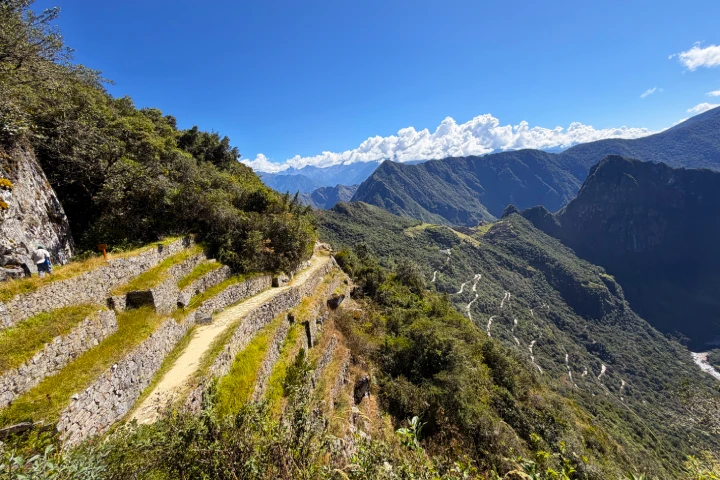
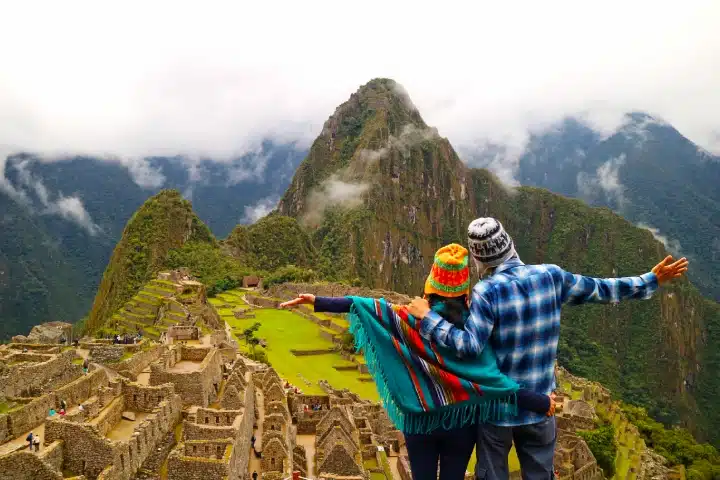
Machu Picchu seen from the Sun Gate after hiking the Inca Trail.
Classic Inca Trail Difficulty by Day Summary
| Day | Main Challenge | Difficulty |
|---|---|---|
| Day 1 | Starting the trek and adapting to the terrain | Moderate |
| Day 2 | Dead Woman’s Pass and high altitude | Challenging |
| Day 3 | Long hiking hours and accumulated fatigue | Moderate to challenging |
| Day 4 | Early arrival at Machu Picchu | Easy to moderate |
Common Mistakes That Can Make the Inca Trail Harder
The Inca Trail is a challenging but achievable trek when you prepare correctly. However, some common mistakes can make the experience more difficult than necessary.
Understanding these mistakes before your journey can help you hike more comfortably and enjoy the route to Machu Picchu.
1. Starting the Trek Without Proper Acclimatization
One of the biggest mistakes travelers make is arriving in Cusco and starting the Inca Trail too soon.
Even physically fit hikers can feel the effects of altitude if their bodies have not had enough time to adjust.
Better approach:
- Spend at least 2–3 days in Cusco or the Sacred Valley before the trek.
- Start with lighter activities.
- Allow your body to adapt gradually.
2. Carrying Too Much Weight
A heavy backpack can make every climb, descent, and long hiking section feel much harder.
Extra weight becomes especially noticeable during steep sections and thousands of stone steps.
Better approach:
- Pack only essential items and choose lightweight clothing and equipment.
3. Walking Too Fast at the Beginning
Many hikers start the first day with too much energy and walk faster than their natural pace.
The Inca Trail is not a race. Conserving energy is essential because your body needs to recover and continue hiking for several days.
Better approach:
- Maintain a steady rhythm, take regular breaks, and listen to your body.
4. Underestimating Mountain Weather
Weather conditions in the Andes can change quickly.
A sunny morning can become cold, windy, or rainy later in the day. Being uncomfortable because of inadequate clothing can make the trek feel much harder.
Better approach:
- Bring layers that allow you to adapt to changing conditions.
Is the Inca Trail Worth the Challenge?
The Inca Trail is challenging, but the difficulty is part of what makes this journey unforgettable.
Walking through ancient Inca pathways, crossing Andean landscapes, discovering archaeological sites, and finally arriving at Machu Picchu through the Sun Gate creates an experience that goes far beyond simply visiting the citadel.
With proper preparation, realistic expectations, and the right route choice, the Inca Trail is an achievable adventure for many travelers.
The challenge is not only reaching Machu Picchu — it is experiencing the history, landscapes, and sense of achievement that come with completing one of the world’s most famous trekking routes.
Planning your Inca Trail adventure starts with choosing the right route. Whether you prefer the complete Classic Inca Trail experience or a shorter journey through the Short Inca Trail, our team can help you find the best option for your travel style and preparation level.
Explore our Inca Trail tours and take the first step toward your Machu Picchu adventure.