

Peru is one of the most geographically diverse countries in South America. From the Pacific coast at sea level to towering Andean peaks above 6,000 meters (19,685 feet), altitude plays a major role in shaping travel experiences across the country. Whether you’re planning to visit Cusco, Machu Picchu, Rainbow Mountain, or Lake Titicaca, understanding the altitude in Peru can help you prepare for a safer and more enjoyable trip.
Many travelers are surprised by how quickly elevation changes between destinations. While Lima sits almost at sea level, Cusco is located at over 3,300 meters (10,800 feet), which can cause altitude-related symptoms for visitors arriving from lower elevations.
In my case, living in Cusco means I’m now fully accustomed to the altitude. However, I still remember my first experiences in high-altitude areas. During the first few hours, I felt mild fatigue, slight shortness of breath while walking uphill, and a light headache. Taking things slowly, staying hydrated, and avoiding intense physical activity helped me adapt much more comfortably.
This guide covers everything you need to know about Peru’s altitude, including elevation by destination, altitude sickness symptoms, acclimatization tips, and practical travel advice.
What Is the Altitude in Peru?
There is no single altitude for Peru because the country includes coastal deserts, the Andean mountains, and the Amazon rainforest.
Generally, Peru can be divided into three geographical zones:
| Region | Average Altitude |
|---|---|
| Coast | 0–500 m (0–1,640 ft) |
| Andes | 2,500–4,500 m (8,200–14,760 ft) |
| Amazon | 80–1,000 m (262–3,280 ft) |
Most travelers encounter high altitude when visiting destinations in the Andes, where many of Peru’s most famous attractions are located.
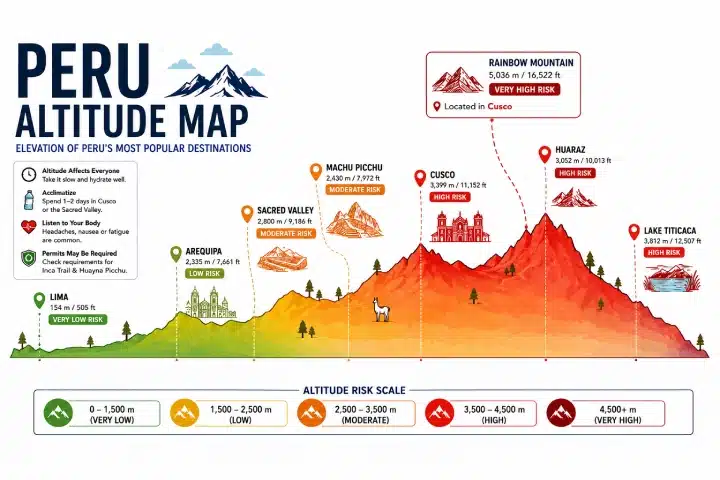
Altitude of Peru’s most popular destinations.
Why Peru’s Altitude Varies So Much
The Andes Mountains run through the center of Peru from north to south. This massive mountain range creates dramatic elevation differences across relatively short distances.
For example:
- Lima: 154 m (505 ft)
- Cusco: 3,399 m (11,152 ft)
- Sacred Valley: approximately 2,800 m (9,186 ft)
- Machu Picchu: 2,430 m (7,972 ft)
- Rainbow Mountain: 5,036 m (16,522 ft)
As a result, travelers can gain thousands of meters in elevation within a single day, increasing the risk of altitude sickness if they do not acclimatize properly.
Altitude of Peru’s Most Popular Destinations
Cusco Altitude
Cusco sits at approximately 3,399 meters (11,152 feet) above sea level.
As the former capital of the Inca Empire and the gateway to Machu Picchu, Cusco is often where travelers first experience Peru’s high altitude.
Many visitors report:
- Mild headaches
- Fatigue
- Dizziness
- Shortness of breath
Symptoms usually improve within one to three days.
You might also be interested in → How to Avoid Altitude Sickness in Cusco
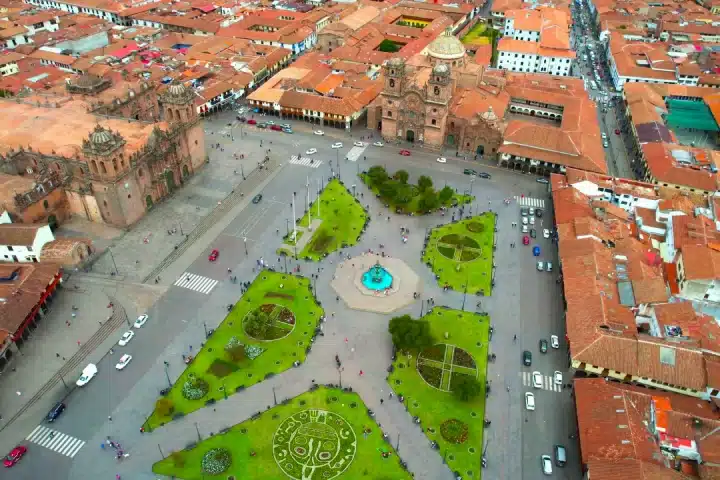
Cusco at 3,399 meters above sea level.
Machu Picchu Altitude
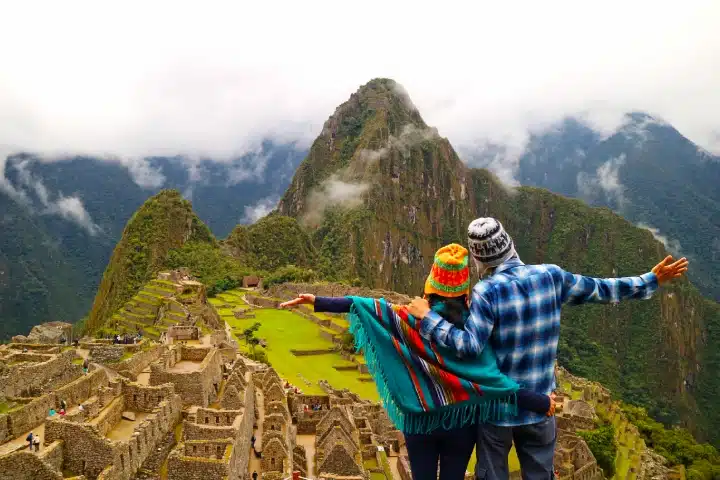
Machu Picchu is located at approximately 2,430 meters (7,972 feet).
Interestingly, Machu Picchu is lower than Cusco. Many travelers actually feel better upon arrival because the elevation decreases significantly.
Although altitude sickness is less common at Machu Picchu, some visitors may still experience symptoms if they have not acclimatized beforehand.
Sacred Valley Altitude
The Sacred Valley averages around 2,800 meters (9,186 feet).
Many travel experts recommend spending a night or two in the Sacred Valley before heading to Cusco because the lower altitude allows for a gentler adaptation process.
Rainbow Mountain Altitude
Rainbow Mountain reaches approximately 5,036 meters (16,522 feet).
This makes it one of Peru’s highest and most physically demanding tourist attractions.
Without proper acclimatization, visitors may experience:
- Severe fatigue
- Breathlessness
- Headaches
- Nausea
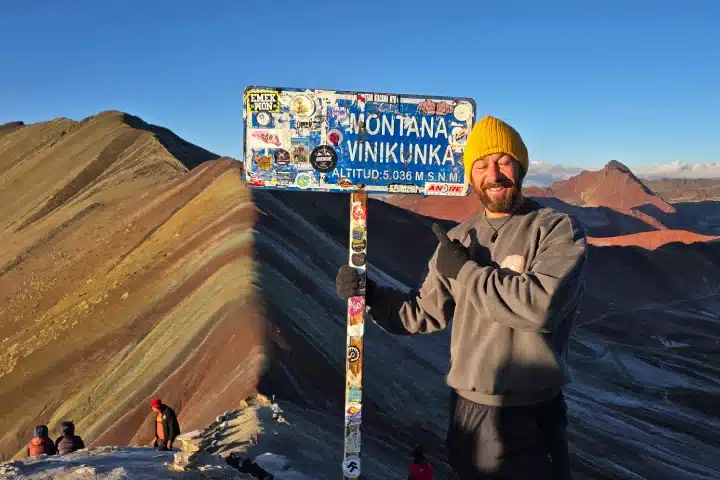
One of Peru’s highest destinations, Vinicunca.
Lake Titicaca Altitude
Lake Titicaca sits at approximately 3,812 meters (12,507 feet).
As the world’s highest navigable lake, it presents a greater altitude challenge than Cusco.
Many travelers experience mild symptoms during their first day in Puno.
Arequipa Altitude
Arequipa is located at approximately 2,335 meters (7,661 feet).
Most travelers adjust easily here because the elevation is moderate compared to Cusco or Puno.
Huaraz Altitude
Huaraz sits at approximately 3,052 meters (10,013 feet).
It serves as the base for many trekking adventures in the Cordillera Blanca and requires proper acclimatization before undertaking strenuous hikes.
Altitude Table for Major Cities and Tourist Attractions in Peru
| Destination | Altitude (m) | Altitude (ft) | Altitude Risk | Recommended Acclimatization* |
|---|---|---|---|---|
| Lima | 154 | 505 | Very Low | Not necessary |
| Arequipa | 2,335 | 7,661 | Low | 0–1 day |
| Machu Picchu | 2,430 | 7,972 | Moderate | 1 day |
| Sacred Valley | 2,800 | 9,186 | Moderate | 1–2 days |
| Huaraz | 3,052 | 10,013 | High | 2–3 days |
| Cusco | 3,399 | 11,152 | High | 2–3 days |
| Lake Titicaca (Puno) |
3,812 | 12,507 | High | 2–3 days |
| Rainbow Mountain | 5,036 | 16,522 | Very High | 3–4 days |
| Ausangate Trek (Highest Point) |
5,200+ | 17,060+ | Very High | 4+ days |
*Acclimatization times are general recommendations and may vary depending on each person’s condition, itinerary, and physical fitness.
What is Altitude Sickness?
Altitude sickness, also known as Acute Mountain Sickness (AMS), occurs when the body struggles to adapt to reduced oxygen levels at higher elevations.
It commonly affects travelers arriving in destinations above 2,500 meters (8,200 feet).
Common Symptoms
Symptoms can include:
- Headache
- Fatigue
- Nausea
- Loss of appetite
- Dizziness
- Difficulty sleeping
- Shortness of breath
“
When I first spent time in Peru’s high-altitude regions, I noticed mild fatigue and slight breathlessness when walking uphill. These symptoms disappeared as my body gradually adapted.
”
Who is Most Likely to Experience It?
Altitude sickness can affect anyone regardless of age or fitness level.
Risk factors include:
- Rapid ascent
- Previous history of altitude sickness
- Intense physical activity upon arrival
- Insufficient hydration
Even highly athletic travelers can develop symptoms.
How to Acclimatize to Peru’s High Altitude
Proper acclimatization significantly reduces the likelihood of altitude sickness.
Stay Hydrated
High-altitude environments can increase dehydration.
Drink water consistently throughout the day and avoid excessive alcohol consumption.
Avoid Intense Physical Activity
One of the biggest mistakes travelers make is trying to hike immediately after arriving in Cusco.
During my own adaptation period, taking things slowly made a noticeable difference. Avoiding strenuous activities during the first 24–48 hours helps your body adjust more effectively.
Get Enough Rest
Quality sleep allows your body to recover and adapt to reduced oxygen levels.
Consider keeping your first day flexible and avoiding packed itineraries.
Coca Tea and Local Remedies
Many visitors try coca tea, a traditional Andean remedy commonly used to help ease altitude-related discomfort.
While experiences vary, many travelers find it helpful during the adjustment period.
How Many Days Do You Need to Adjust to the Altitude?
Most travelers require:
- 1–2 days for moderate adaptation.
- 2–4 days for more complete acclimatization.
- Additional time before attempting high-altitude treks.
If you’re planning to visit Rainbow Mountain or undertake demanding hikes, spending several days in Cusco or the Sacred Valley beforehand is highly recommended.
Is Machu Picchu High Altitude?
Compared to many destinations in Peru, Machu Picchu sits at a relatively moderate elevation.
At 2,430 meters (7,972 feet), it is significantly lower than Cusco, Puno, and Rainbow Mountain.
Most visitors who have already spent time in Cusco experience fewer altitude-related issues when they reach Machu Picchu.
Conclusion
Understanding the altitude in Peru is essential for planning a successful trip. While destinations like Cusco, Lake Titicaca, and Rainbow Mountain offer unforgettable experiences, their high elevations can challenge unprepared travelers.
Fortunately, altitude sickness is often manageable with proper acclimatization, hydration, and pacing. In my experience, the key is simple: slow down, drink plenty of water, and give your body time to adjust. Those first mild symptoms of fatigue and shortness of breath quickly faded once I respected the altitude and adapted naturally.
With the right preparation, you’ll be able to enjoy Peru’s breathtaking landscapes, ancient history, and incredible mountain scenery with confidence.
“
Ready to explore Peru’s high-altitude destinations?
Get in touch and start planning your Peru adventure today.
”