
The Inca Jungle Trek to Machu Picchu is moderately challenging. You don’t need to be an experienced trekker, but you should be comfortable with several hours of physical activity over multiple days.
Unlike the Inca Trail, the Inca Jungle combines mountain biking, jungle trekking, rafting, ziplining, and a final walk to Machu Picchu. The challenge comes from the combination of activities, changing terrain, weather, and the accumulated effort throughout the journey.
💡 Did You Know?
Conde Travel is a pioneer of the Inca Jungle route to Machu Picchu. Discover our history →
How Difficult Is the Inca Jungle Trek?
The Inca Jungle Trek is best described as moderate to challenging.
It isn’t a technical trek, and previous multi-day trekking experience isn’t required. However, a reasonable level of fitness will help you enjoy the experience, especially because some days involve several hours of biking or hiking.
The difficulty also varies depending on the activity:
| Activity | Difficulty |
|---|---|
| Mountain biking | Moderate |
| Jungle trekking | Moderate–Challenging |
| Rafting (optional) | Moderate |
| Ziplining (optional) | Easy–Moderate |
| Trekking to Aguas Calientes | Moderate |
| Machu Picchu visit | Easy–Moderate |
What Makes the Inca Jungle Challenging?
The Inca Jungle isn’t challenging because of one extremely difficult activity.
The challenge comes from doing several active experiences over four consecutive days.
You’ll start at Abra Málaga, around 4,350 m (14,270 ft), before descending by bike toward the warmer and more humid cloud forest and jungle.
Over the following days, you’ll combine trekking with adventure activities and eventually walk to Aguas Calientes before visiting Machu Picchu.
Inca Jungle Trek Difficulty by Day
Day 1: Downhill Biking & Rafting
The first day is one of the most adventure-filled parts of the journey.
From Abra Málaga, you’ll ride approximately 55 km (34 miles) downhill toward Santa María. The biking takes around 3.5 to 4 hours.
Because the route is mainly downhill, the challenge isn’t climbing. Instead, you’ll need to stay comfortable and in control of the bike for several hours.
Later in the day, you can join a 2- to 3-hour rafting experience on the Vilcanota River with Class II and III+ rapids.
Difficulty: Moderate
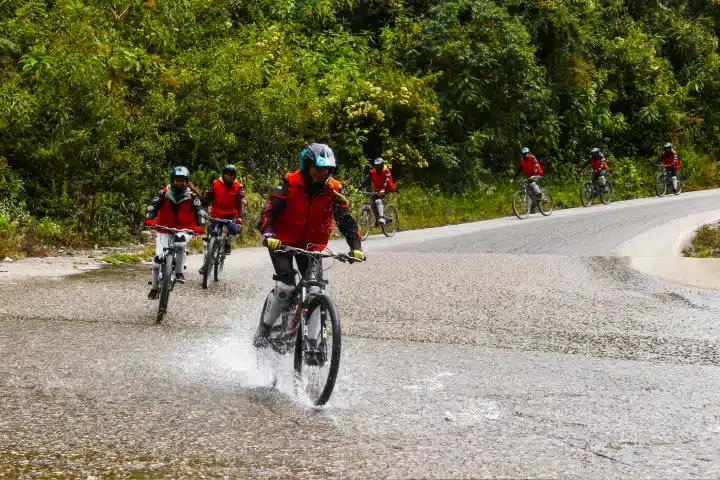
Mountain biking adventure
Day 2: Jungle Trekking
Day 2 is one of the more physically demanding sections of the Inca Jungle.
You’ll hike approximately 15 km (9.3 miles) over around 8 hours, including climbs and descents through the jungle.
The warm and humid climate can make the hike feel more demanding, but there are also plenty of opportunities to stop, enjoy the scenery, and learn about local communities, coffee farms, and the region’s history.
After the trek, you’ll have the opportunity to relax at Cocalmayo Hot Springs in Santa Teresa.
Difficulty: Moderate–Challenging
Day 3: Ziplining & Trekking to Aguas Calientes
The day begins with an optional zipline experience.
The activity includes three ziplines and a hanging bridge, with the longest cable reaching 950 meters. It is exciting but doesn’t require the same physical effort as the trekking sections.
Afterward, you’ll continue to Hidroeléctrica and walk approximately 14 km (8.6 miles) along the train tracks and Urubamba River to reach Aguas Calientes.
This section is generally more relaxed than Day 2, although walking this distance after two active days can still feel tiring.
Difficulty: Moderate
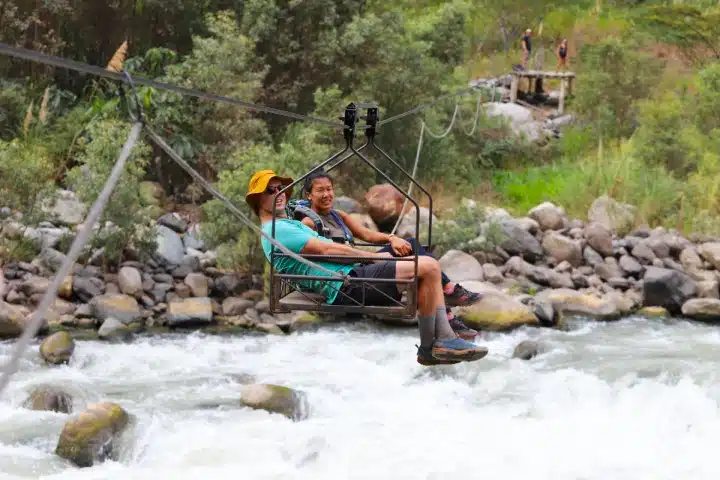
Ziplining over the river
Day 4: Machu Picchu
The final day is considerably less demanding.
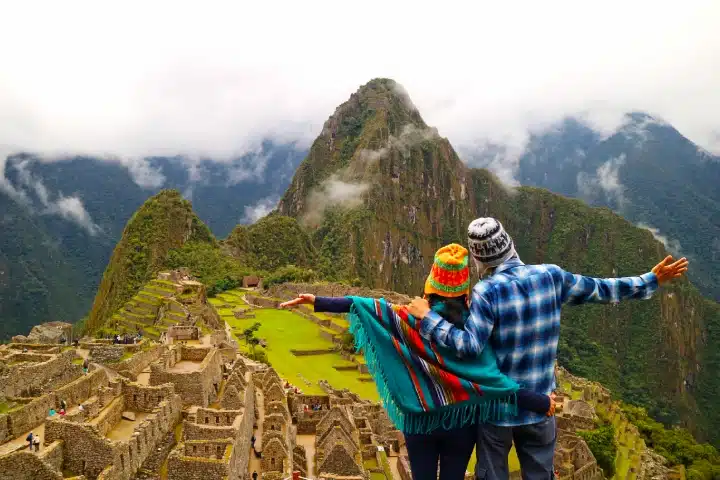
You’ll explore Machu Picchu with your guide for approximately 2–3 hours, depending on your circuit.
There is walking and some stairs around the archaeological site, but compared with the previous days, this is the easiest part of the journey.
Difficulty: Easy–Moderate
How Difficult Are the Adventure Activities?
Mountain Biking
Mountain biking is one of the main highlights of the Inca Jungle.
The route is predominantly downhill, but you’ll still need to control the bike for an extended period and stay focused on the road and surrounding conditions.
You don’t need to be an experienced mountain biker, but you should feel comfortable riding a bicycle.
Rafting (Optional)
Rafting adds another active element to the journey.
You’ll be accompanied by a professional guide and provided with the necessary safety equipment. No previous rafting experience is required, but you should be comfortable following instructions and being active in the water.
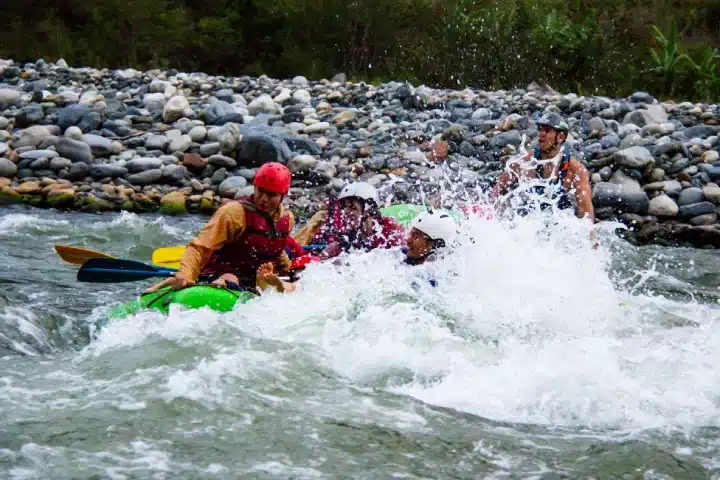
River rafting adventure
Ziplining (Optional)
Ziplining is less physically demanding than the trekking or biking sections.
You don’t need previous experience. Your guide will explain how to use the equipment and what to do before you start.
For many travelers, the biggest challenge is simply getting past the initial nerves!
Do You Need to Be Fit for the Inca Jungle Trek?
You don’t need to be an athlete or an experienced trekker.
However, being reasonably active will make the experience much more enjoyable.
You should be comfortable with:
- Walking for several hours
- Riding a bicycle for an extended downhill section
- Walking on uneven terrain
- Being active in warm and humid conditions
- Participating in outdoor activities for several consecutive days
If you regularly walk, hike, cycle, or enjoy outdoor activities, you’ll already have a good foundation.
Do You Need Previous Experience?
No.
You don’t need previous experience in mountain biking, rafting, ziplining, or multi-day trekking. Your guides will provide instructions and safety guidance before the activities.
What matters most is being prepared for several active days rather than one extremely difficult hike.
Is the Inca Jungle Trek Harder Than the Inca Trail?
Not necessarily. The two routes are challenging in different ways.
The Inca Trail is more focused on sustained trekking, stairs, and altitude. The Inca Jungle combines trekking with mountain biking and adventure activities.
| Inca Jungle | Inca Trail | |
|---|---|---|
| Main challenge | Biking + trekking | Trekking + altitude |
| Adventure activities | Yes | No |
| High-altitude hiking | Limited | Significant |
| Overall difficulty | Moderate–Challenging | Moderate–Challenging |
If you’re interested in the physical demands of the Inca Trail, you can read our How Difficult Is the Inca Trail? Complete Difficulty Guide.
Who Is the Inca Jungle Trek Best For?
The Inca Jungle is a good choice if you want to:
- Combine trekking with adventure activities
- Experience mountain biking in the Andes
- Explore jungle landscapes and local communities
- Enjoy a more diverse route to Machu Picchu
- Stay active throughout your journey
It may not be the best choice if you’re looking specifically for a traditional, trekking-focused experience.
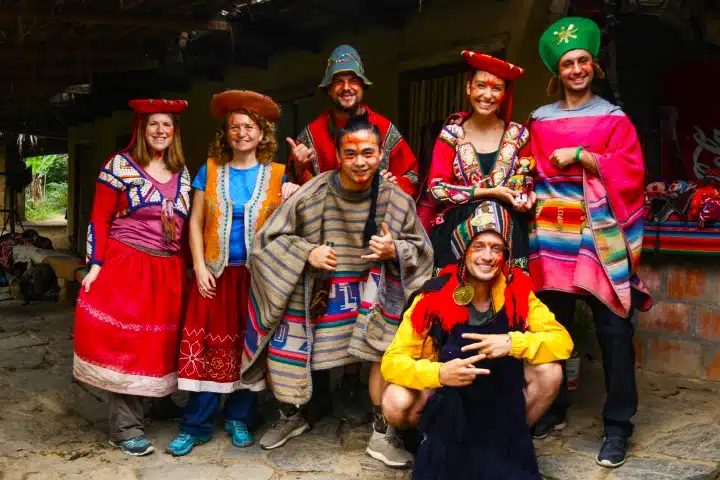
Sharing the experience with local communities
Want to learn more about the route itself? Read our Complete Guide to the Inca Jungle Trek to Machu Picchu.
Is the Inca Jungle Trek Right for You?
If you’re reasonably active and enjoy outdoor adventures, the Inca Jungle can be an excellent way to reach Machu Picchu.
It’s challenging enough to feel adventurous, but you don’t need to be an experienced trekker to enjoy it.
The key is to arrive prepared, pace yourself, listen to your guide, and enjoy the journey rather than focusing only on the physical challenge.
Ready to Experience the Inca Jungle?
If this sounds like the kind of adventure you’re looking for, explore our Inca Jungle Trek options and find the route that fits your travel plans.
Explore Inca Jungle Tours →Not sure which itinerary is right for you? Contact our local team in Cusco and we’ll be happy to help.