

High in the Peruvian Andes, the Q’eswachaka Bridge remains one of the most extraordinary living traditions inherited from the Inca Empire.
Unlike modern bridges made of steel or concrete, this suspension bridge is entirely handcrafted using braided grass fibers and ancient techniques passed down from generation to generation.
Located south of Cusco, the Q’eswachaka Bridge is considered the last surviving Inca rope bridge in Peru and continues to be rebuilt every year by local Andean communities as part of a centuries-old cultural ceremony recognized by UNESCO.
Visiting Q’eswachaka is much more than seeing an ancient bridge. It is an opportunity to experience:
- Authentic Andean culture
- Inca engineering
- Breathtaking mountain landscapes
- One of Peru’s most unique living traditions
What Is the Q’eswachaka Bridge?
The Q’eswachaka Bridge is a traditional Inca rope bridge suspended over the Apurímac River in the Cusco region of Peru.
The bridge is made entirely from:
- ichu grass
- handwoven ropes
- ancestral weaving techniques
It measures approximately:
- 28 meters (92 ft) long
- 1.2 meters (4 ft) wide
What makes the bridge truly remarkable is that it is rebuilt by hand every year using the same techniques used during the Inca Empire.
Why Is the Q’eswachaka Bridge Important?
The Q’eswachaka Bridge is not only an ancient structure — it is a living symbol of Andean identity and community tradition.
For centuries, rope bridges connected remote areas across the Andes and formed part of the massive Inca road network known as the Qhapaq Ñan.
Today, Q’eswachaka remains the last surviving bridge of its kind still preserved through traditional methods.
The annual rebuilding ceremony was recognized by UNESCO as an Intangible Cultural Heritage of Humanity because it preserves:
- ancestral knowledge
- traditional engineering
- community cooperation
- Quechua cultural identity
The History of the Last Inca Rope Bridge
During the Inca Empire, suspension bridges were essential for transportation and communication across the Andes.
The Incas built an enormous road system connecting mountains, valleys, and remote regions throughout South America.
Because the terrain was extremely rugged, rope bridges allowed people, messengers, and supplies to cross deep canyons and rivers safely.
Q’eswachaka is believed to be one of the few remaining examples of this ancient engineering tradition.
Although modern bridges replaced most Inca rope bridges centuries ago, nearby Quechua communities continued preserving Q’eswachaka using the same ancestral techniques inherited from their ancestors.
Today, the bridge represents a direct connection between modern Peru and the engineering knowledge of the Incas.
You might also be interested in → Inca Religion: The Gods, Myths and Rituals that Forged an Empire
How the Q’eswachaka Bridge Is Rebuilt Every Year
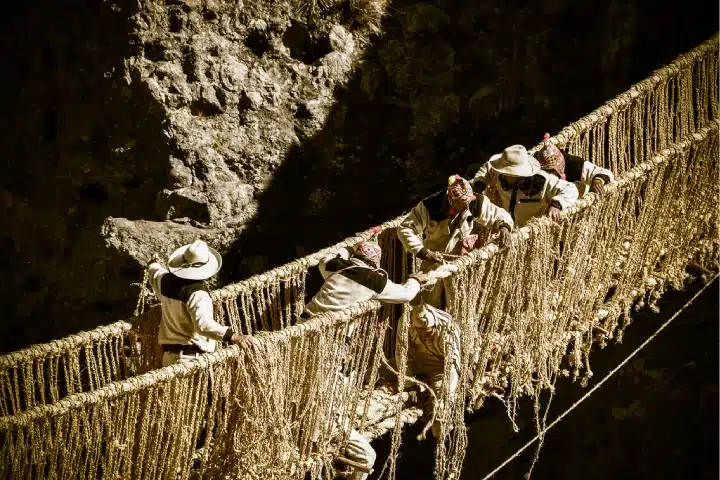
Local Quechua communities rebuild the Q’eswachaka Bridge every year using ancestral Inca traditions and handwoven ichu grass ropes
One of the most fascinating aspects of Q’eswachaka is its annual reconstruction ceremony.
Every year, four local Quechua communities gather to:
- Remove the old bridge
- Braid new ropes from ichu grass
- Rebuild the bridge entirely by hand
The communities involved include:
- Huinchiri
- Chaupibanda
- Choccayhua
- Ccollana Quehue
The process usually lasts several days and combines teamwork, rituals, music, food, and cultural celebrations.
The reconstruction is not only practical maintenance — it is a sacred tradition that strengthens community identity and preserves ancient knowledge.
The Incredible Inca Engineering Behind Q’eswachaka
The Q’eswachaka Bridge demonstrates how advanced Inca engineering truly was.
Without modern tools or machinery, the Incas created:
- suspension bridges
- mountain roads
- agricultural terraces
- sophisticated water systems
The bridge’s structure relies on:
- braided fiber cables
- natural tension
- traditional weaving methods
- collective labor
Although it appears fragile, the bridge is surprisingly strong and flexible.
Its design allows it to withstand movement, wind, and the challenging Andean environment.
Where Is the Q’eswachaka Bridge Located?
The bridge is located in the province of Canas, south of Cusco, Peru.
Approximate travel time from Cusco:
- 3.5 to 4 hours by road
The bridge sits at approximately:
- 3,700 meters (12,100 ft) above sea level
The surrounding area offers:
- dramatic canyons
- Andean landscapes
- traditional villages
- scenic mountain roads
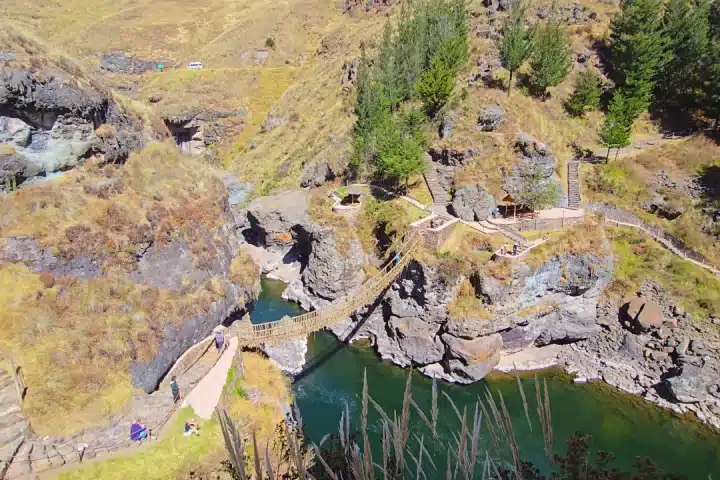
The Q’eswachaka Bridge stretches across the dramatic Apurímac Canyon surrounded by breathtaking Andean landscapes
How to Visit Q’eswachaka from Cusco
There are two main ways to visit the bridge.
Guided Tours
The easiest option is joining a guided tour from Cusco.
Most tours include:
- transportation
- tour guide
- stops at nearby lagoons
- cultural explanations
This is usually the best option for first-time visitors.
Independent Travel
Travelers can also visit independently by:
- renting a car
- hiring private transportation
However, roads are remote, and public transportation can be limited.
Best Time to Visit the Q’eswachaka Bridge
The best time to visit is during the dry season:
- May to September
During these months:
- roads are safer
- skies are clearer
- weather conditions are more stable
The annual rebuilding ceremony usually takes place in June and offers one of the most authentic cultural experiences in Peru.
What to Expect During Your Visit
Visiting Q’eswachaka feels very different from visiting Peru’s more crowded tourist attractions.
Expect:
- peaceful Andean scenery
- traditional communities
- dramatic canyon views
- authentic cultural experiences
Many visitors also enjoy:
- crossing the bridge carefully
- photography
- learning about Inca traditions
- exploring nearby lagoons
Walking across the bridge can feel both exciting and unforgettable because the structure gently moves beneath your feet.
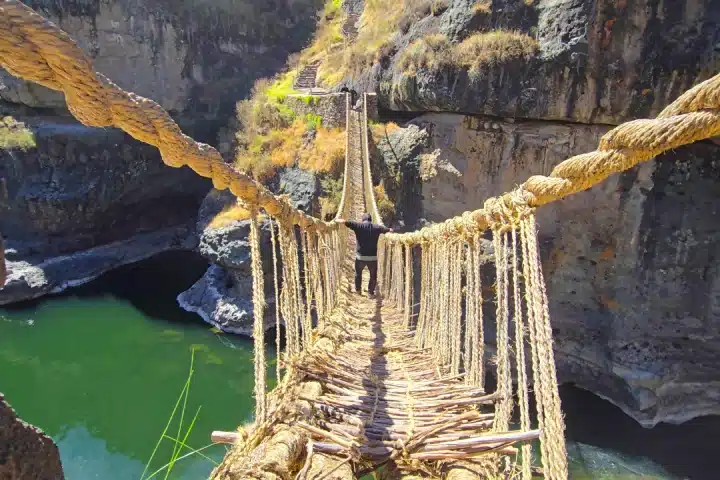
Crossing the Q’eswachaka Bridge is one of the most unique cultural experiences in the Peruvian Andes
Travel Tips for Visiting Q’eswachaka
1. Acclimatize Before Visiting
The bridge is located at high altitude.
Spend at least 1–2 days in Cusco before visiting.
2. Bring Warm Clothing
Weather conditions can change quickly in the Andes.
Bring:
- layers
- rain jacket
- sunscreen
- comfortable walking shoes
3. Respect Local Traditions
Q’eswachaka is a living cultural tradition, not simply a tourist attraction.
Respect:
- local ceremonies
- community spaces
- cultural customs
Nearby Attractions Around Q’eswachaka
Many tours combine the bridge with nearby attractions such as:
- The Four Lagoons of Cusco
- Andean villages
- Scenic viewpoints
- Traditional communities
This makes the experience even more rewarding for travelers interested in rural tourism and local culture.
Why Q’eswachaka Is One of Peru’s Most Unique Cultural Experiences
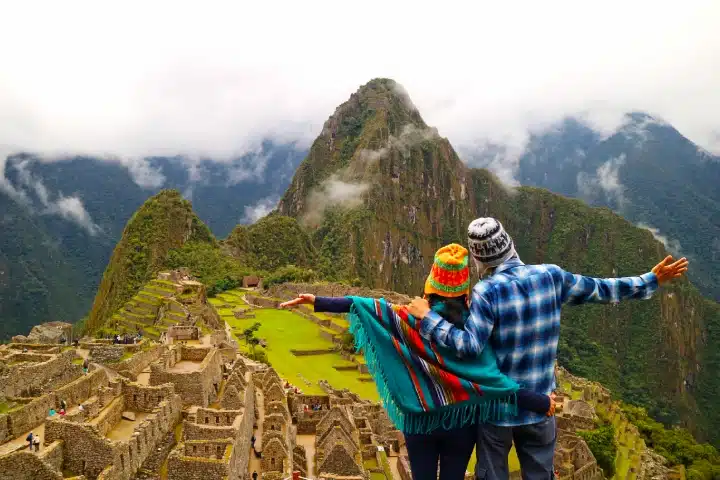
While Machu Picchu attracts millions of visitors every year, Q’eswachaka offers something much rarer authenticity, living history, ancestral traditions, and direct cultural connection.
It is one of the few places in Peru where travelers can still witness ancient Inca traditions actively preserved by local communities.
For travelers seeking:
- off-the-beaten-path destinations
- authentic cultural experiences
- Andean history
- unique photography opportunities
Q’eswachaka is truly unforgettable.
Conclusion
The Q’eswachaka Bridge is much more than an ancient rope bridge in Peru.
It is a living symbol of:
- Inca engineering
- Quechua identity
- Ancestral knowledge
- Cultural preservation
Visiting this remarkable destination allows travelers to experience a unique connection between the past and present in the heart of the Peruvian Andes.
If you are looking for one of the most authentic cultural experiences near Cusco, the Q’eswachaka Bridge deserves a place on your Peru itinerary.
“
Discover hidden cultural treasures in Cusco
Experience one of Cusco’s most authentic Andean traditions with unforgettable cultural tours in Peru. Contact us!
”