

Qorikancha Temple is one of the most important archaeological and spiritual sites in South America. Located in the historic center of Cusco, it was once the most sacred temple of the entire Inca Empire and served as the religious, astronomical, and political heart of Inca civilization.
Today, it stands as a unique architectural fusion of Inca and Spanish colonial structures, making it one of the most fascinating historical sites in Peru.
What is Qorikancha?
Qorikancha, also known as the Temple of the Sun, was the most important religious temple in the Inca Empire. Located in Cusco, the capital of the Inca Empire, Qorikancha occupied a privileged position within the city.
The Incas considered Cusco the center of their world, and the temple stood at the heart of its religious and ceremonial life. The temple was dedicated primarily to Inti, the Sun God, and was regarded as one of the most sacred places in the Andean world.
Meaning of Qorikancha
The name comes from the Quechua language:
- Qori = gold
- Kancha = enclosed space / temple
So, Qorikancha means “Golden Temple”.
This name is not only symbolic. Chroniclers from the Spanish conquest described walls completely covered in gold plates that reflected sunlight like a mirror, creating a dazzling spiritual experience.
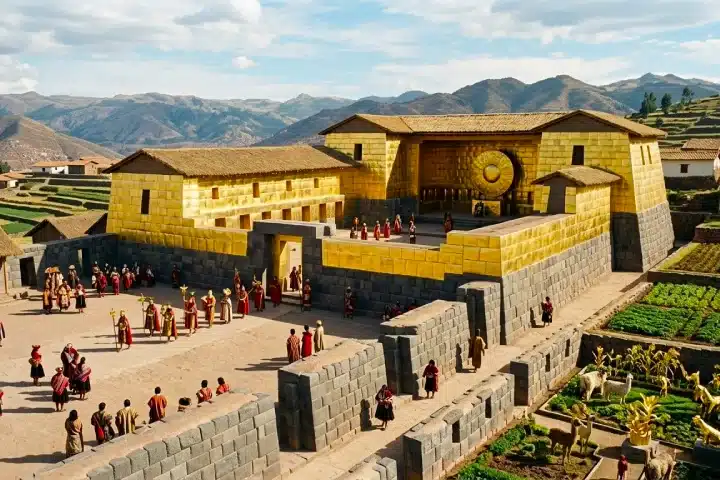
Reconstruction showing how Qorikancha may have looked in Inca times.
Is it Qorikancha or Coricancha?
Both names refer to the same site. “Qorikancha” is the modern spelling based on Quechua pronunciation, while “Coricancha” is an older Spanish adaptation commonly used in historical documents and travel guides.
Why was Qorikancha Important to the Inca Empire?
Qorikancha was dedicated to Inti, the Sun God, the most important deity in Inca cosmology.
However, it was much more than a place of worship. It served as:
- The spiritual center of the Inca Empire
- A ceremonial site for important religious rituals
- The astronomical reference point for the Inca calendar
- A sacred space reserved for priests, nobles, and members of the royal family
Historians believe that Qorikancha played a central role in connecting religion, politics, and astronomy. Because for the Incas, Qorikancha was not simply a religious building. It represented the spiritual center of the empire, where the connection between the gods, nature, and human society was maintained through rituals and ceremonies.
History of Qorikancha
The Origins of Qorikancha
Qorikancha was built during the height of the Inca Empire and became one of the most sacred religious complexes in the Andean world. Historians generally associate its expansion with the reign of Emperor Pachacuti in the 15th century, when Cusco was transformed into the political and spiritual capital of the empire.
Qorikancha During the Inca Empire
As the most important temple dedicated to Inti, the Sun God, Qorikancha occupied a central role in Inca religion. Priests conducted ceremonies, offerings, and rituals linked to agriculture, political authority, and seasonal cycles.
The temple was also connected to the ceque system, a network of sacred pathways that linked Cusco with important shrines throughout the empire. This reinforced Qorikancha’s position as the spiritual heart of the Inca world.
Qorikancha at Its Peak
During the height of the Inca Empire, Qorikancha was one of the most impressive religious sites in South America. Spanish chroniclers described walls covered with gold sheets, ceremonial rooms decorated with precious metals, and sacred gardens containing life-sized representations of plants and animals made from gold and silver.
These elements were not merely decorative. For the Incas, gold represented the power of the Sun, making Qorikancha a physical manifestation of their most important deity.
The Spanish Conquest and Transformation
After the Spanish arrived in the 16th century:
- Gold coverings were removed and melted
- Religious artifacts were destroyed
- Parts of the temple were dismantled
However, the original foundations survived thanks to the extraordinary quality of Inca engineering.
The Convent of Santo Domingo
On top of the original temple, Spaniards built the Convent of Santo Domingo, creating a powerful visual contrast:
- Inca stone base (pre-Columbian civilization)
- Colonial Spanish architecture above
This duality makes Qorikancha one of the most visually and historically layered sites in Peru.
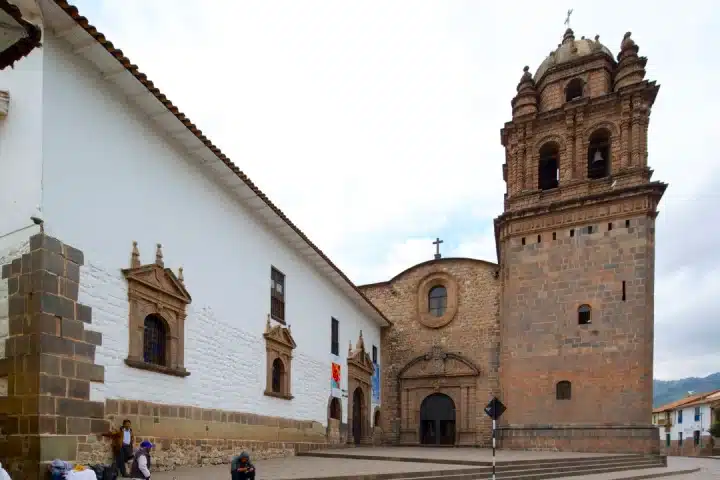
Spanish colonial church built over the Inca temple.
Architecture of Qorikancha
Inca Stone Masonry and Construction Techniques
One of the defining features of Qorikancha is its exceptional stone masonry. Inca builders carefully shaped and polished massive stones so they fit together perfectly without mortar. This technique not only created visually impressive walls but also increased the structure’s resistance to earthquakes.
The temple was built using finely carved andesite stone, demonstrating the high level of craftsmanship achieved by Inca engineers. Today, these walls remain among the best-preserved examples of Inca architecture in Cusco.
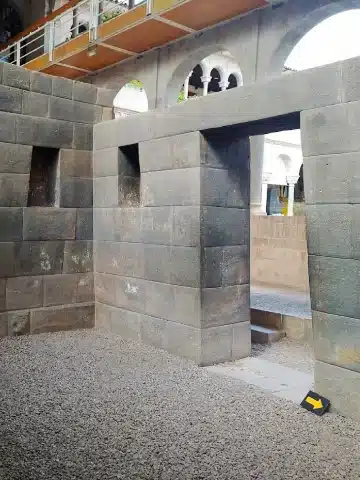
Interior room showcasing Inca stone masonry.
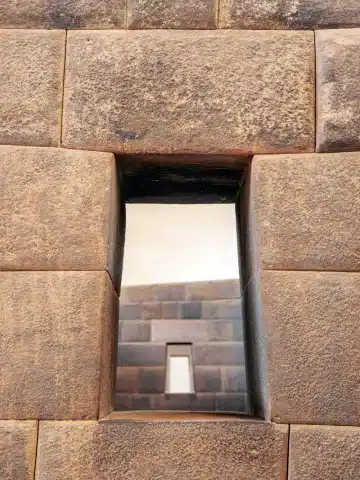
Characteristic Inca window at Qorikancha.
Earthquake-Resistant Engineering
Cusco is located in a seismic zone, yet Inca structures remain standing.
Why?
- Interlocking stone technique
- Slight inward tilt of walls
- Flexible structure design
- No rigid mortar joints
This allowed the temple to survive multiple major earthquakes that destroyed colonial buildings around it.
“
What impressed me most during my visit was seeing the Inca stone walls up close. The precision of the stonework is remarkable, especially when you consider that these structures were built without modern tools. It becomes even more impressive when learning that the walls have survived centuries of earthquakes thanks to the advanced construction techniques used by the Incas.
”
Distinctive Architectural Features
Several architectural elements distinguish Qorikancha from other Inca sites. Visitors can still observe trapezoidal doorways, carefully carved niches, and walls built with exceptional geometric precision. These features were not only decorative but also contributed to the structural stability of the complex.
The Incas often used trapezoidal shapes because they distributed weight more effectively during earthquakes, helping buildings withstand seismic activity.
The Curved Temple Wall
One of the most remarkable architectural features of Qorikancha is its curved outer wall. Unlike the straight walls commonly found in many ancient structures, this design reflects the advanced planning and engineering capabilities of Inca builders.
Today, the curved wall remains one of the most photographed parts of the complex and serves as a striking example of Inca architectural sophistication.
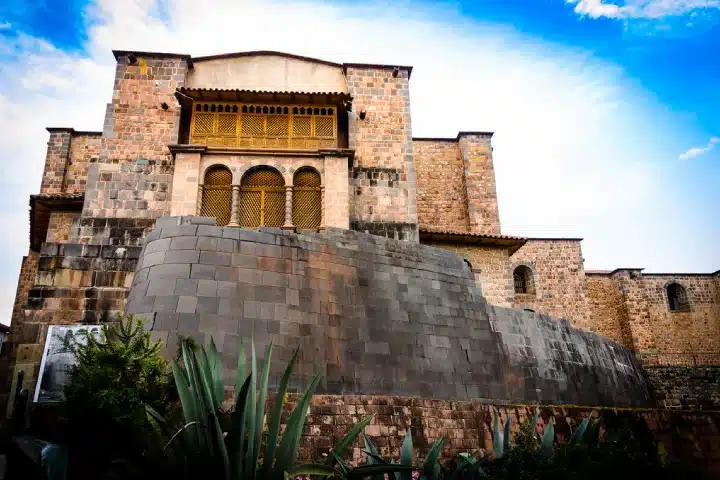
Exterior view of Qorikancha Temple in Cusco.
Gold, symbolism, and sacred design
Historical records describe:
- Gold-plated walls
- Silver and gold sculptures of animals and plants
- Sacred ceremonial gardens
- Rooms dedicated to different deities
These elements represented the harmony between nature, the cosmos, and the Inca state.
Astronomical architecture
The temple was designed as a cosmic model:
- Sun alignment in key chambers
- Ritual spaces oriented to celestial bodies
- Integration of astronomy into architecture
This reinforces the idea that Qorikancha was both a temple and a scientific observatory.
What to See Inside Qorikancha
The Temple of the Sun
The Temple of the Sun was the most sacred area of the complex and the center of worship dedicated to Inti, the Sun God. Although the original gold coverings disappeared after the Spanish conquest, visitors can still admire the impressive Inca walls that formed part of this sacred space.
This section contains some of the finest examples of Inca stonework in the complex. Visitors can observe curved walls and precisely carved stones that once supported the temple’s gold-covered surfaces. Even without the original decorations, it remains one of the most significant spaces within Qorikancha.
Original Inca Stone Foundations
One of the highlights of any visit is observing the original Inca stonework. These perfectly fitted stones showcase the advanced engineering techniques that allowed the structures to withstand major earthquakes throughout the centuries.
Seeing these walls up close was one of the highlights of my visit. The precision of the stonework is difficult to appreciate in photographs, but standing next to the walls reveals the extraordinary craftsmanship achieved by Inca builders.
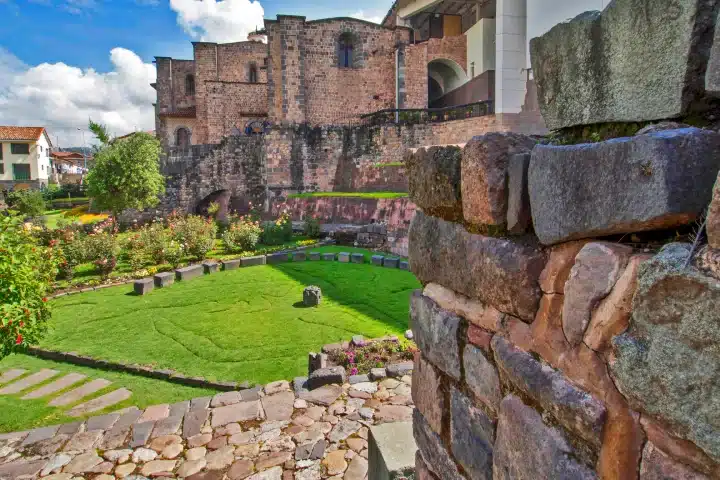
Inca stonework preserved inside Qorikancha.
The Convent of Santo Domingo
Built directly over the original temple, the Convent of Santo Domingo provides a unique opportunity to compare Inca and colonial architecture in the same location. This is one of the most photographed areas of the complex.
Visitors can explore chapels, cloisters, and religious spaces that were constructed after the Spanish conquest. The combination of colonial architecture resting on Inca foundations creates one of the most unique historical settings in Cusco.
Courtyards and Ceremonial Spaces
These open areas were used for religious ceremonies, gatherings, and administrative activities. Walking through the courtyards helps visitors understand how Qorikancha functioned not only as a temple but also as an important center of Inca society.
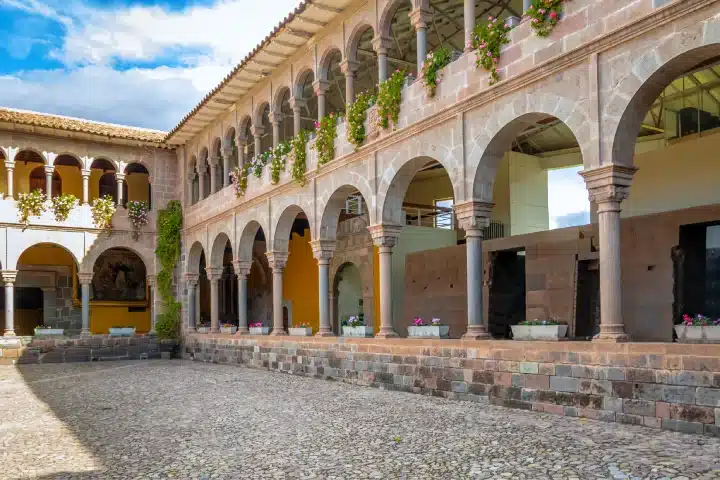
Colonial courtyard built on the foundations of Qorikancha.
Rooms Dedicated to Other Inca Deities
Although Inti was the principal deity worshipped at Qorikancha, the complex also included spaces associated with other important figures in Inca cosmology. Historical accounts mention temples and chambers dedicated to the Moon, stars, thunder, and other celestial forces that played a significant role in Andean beliefs.
These sacred spaces demonstrate that Qorikancha functioned as a broader ceremonial center rather than a temple devoted exclusively to the Sun.
Religious Art and Colonial Exhibits
Today, visitors can also explore exhibits featuring colonial religious artwork, sculptures, and artifacts housed within the convent. These collections add another historical layer to the experience.
Many exhibits display paintings, sculptures, and religious artifacts from the colonial period, illustrating how Catholic traditions were introduced after the conquest while traces of Inca culture remained visible throughout the complex.
Panoramic Views and Architectural Details
Beyond its historical significance, Qorikancha offers excellent opportunities to admire architectural details such as trapezoidal doorways, finely carved stone walls, and interior courtyards. Visitors can also enjoy views of surrounding areas of Cusco from certain sections of the complex.
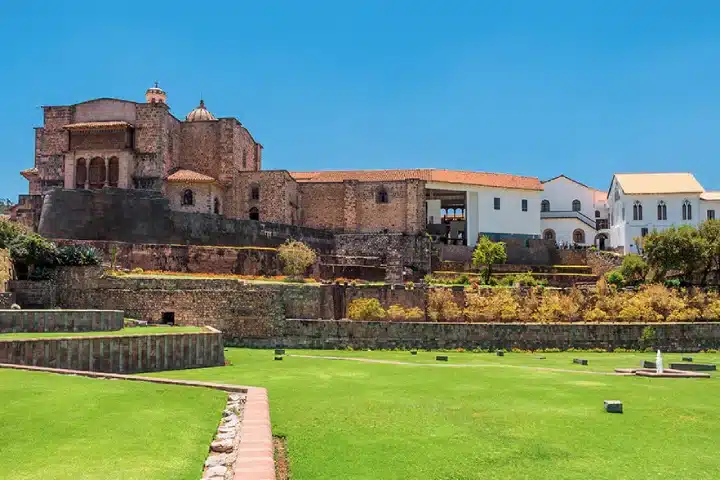
Panoramic view of the Temple of the Sun complex.
Best Photography Spots Inside Qorikancha
Photography enthusiasts will find several excellent viewpoints throughout the complex. Some of the most popular subjects include the curved Inca walls, finely carved stone blocks, cloisters of the Convent of Santo Domingo, and the contrast between Inca and colonial architecture.
Morning visits often provide the best lighting conditions and fewer crowds for photography.
Is a Guided Visit Worth It?
While Qorikancha can be explored independently, visiting with a guide often provides a much richer experience. Many architectural details, astronomical alignments, and symbolic elements are easy to overlook without historical context.
“
Based on my experience, visiting Qorikancha with a guide is highly recommended. The guide’s explanations helped me understand aspects of the temple that would have been difficult to recognize on my own, making the experience significantly more meaningful.
”
How to Visit Qorikancha Temple
Location and exact address
Qorikancha Temple is located in the heart of Cusco city:
Address:
Av. El Sol s/n, Cusco 08002, Peru
It is just a few minutes’ walk from Plaza de Armas, making it extremely accessible for tourists.
How to get there
- Walking distance from city center (5–10 minutes)
- Taxi available from any point in Cusco
- Easy stop in any city walking tour
Opening hours
- Monday – Saturday: 08:30 AM – 5:30 PM
- Sunday: 02:00 PM – 5:30 PM
Important: Hours may change during holidays or religious events.
Entrance Fees
Ticket prices may vary over time, so it is recommended to check the official website or inquire directly at the ticket office before your visit.
Students may be eligible for discounted rates upon presentation of valid identification.
Because schedules and ticket prices may change over time, it is always advisable to verify current information before your visit.
Accessibility Information
Qorikancha is generally accessible to most visitors, with paved pathways and clearly marked routes throughout much of the complex. However, some areas include stairs, uneven surfaces, and historical architectural features that may present challenges for visitors with limited mobility.
If you require specific accessibility accommodations, it is advisable to contact the site in advance or inquire at the entrance before beginning your visit.
What Is the Visit Route Like?
Visitors typically begin their tour by exploring the Inca foundations and Temple of the Sun before continuing through the cloisters and exhibits of the Convent of Santo Domingo. The route is relatively easy to follow and includes both indoor and outdoor sections.
How Long Does a Visit Take?
Most visitors spend between one and two hours exploring Qorikancha. Those interested in architecture, history, and guided tours may wish to allow additional time.
Best Time of Day to Visit
Early morning is often considered the best time to visit Qorikancha. Crowds are usually smaller, temperatures are comfortable, and lighting conditions are ideal for photography.
Late afternoon can also be pleasant, although visitor numbers may increase depending on the season.
Practical Tips for Your Visit
To make the most of your visit:
- Arrive early to avoid crowds.
- Bring a camera or smartphone for architectural photography.
- Wear comfortable walking shoes.
- Allow at least one hour to explore the complex.
- Consider hiring a guide for deeper historical insights.
- Combine your visit with nearby attractions in Cusco’s historic center.
If you are planning your itinerary, consider reading our guide on the best time to visit Cusco before your trip. Weather conditions and tourist seasons can significantly affect your experience when exploring archaeological sites like Qorikancha.
Why Was Qorikancha Different from Other Inca Sites?
Although Machu Picchu, Sacsayhuamán, and Ollantaytambo are among the most famous Inca sites in Peru, each fulfilled a different role within the empire. Understanding these differences helps visitors appreciate why Qorikancha was considered the spiritual heart of Inca civilization.
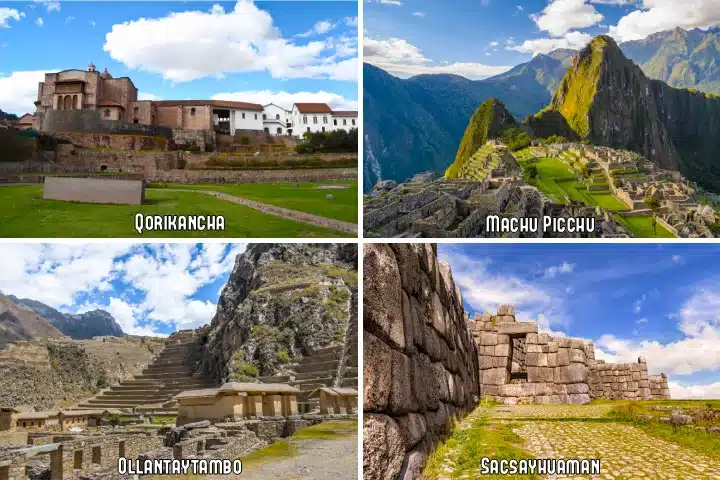
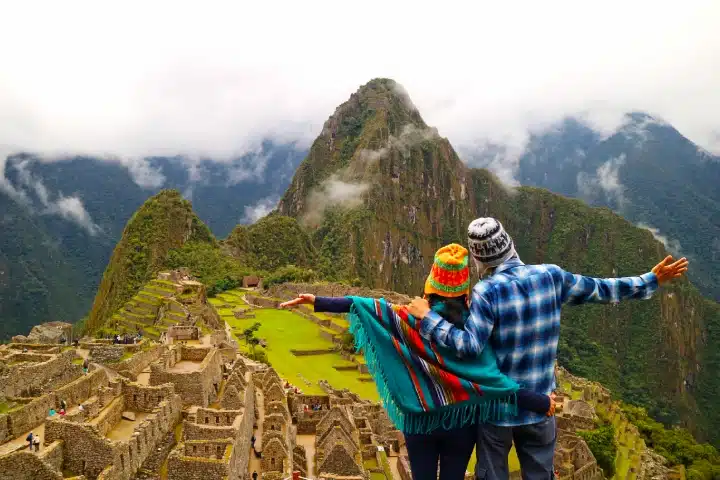
Four of the most remarkable Inca sites in Peru, each with a unique role in the empire.
Comparison of Major Inca Sites
| Site | Main Function | Location | What Makes It Unique |
|---|---|---|---|
| Qorikancha | Religious and astronomical center | Cusco | Most sacred temple of the Inca Empire |
| Sacsayhuaman | Ceremonial and defensive complex | Cusco | Massive megalithic stone walls |
| Machu Picchu | Royal estate and sanctuary | Andes Mountains | Best-preserved Inca citadel |
| Ollantaytambo | Fortress and living Inca town | Sacred Valley | Original Inca urban layout still inhabited |
Qorikancha and Machu Picchu: Spiritual Center vs Royal Estate
Machu Picchu is often considered the most impressive Inca site in Peru due to its spectacular mountain setting and remarkable preservation. However, during the Inca period, Qorikancha held greater religious importance.
While Machu Picchu functioned primarily as a royal estate associated with Emperor Pachacuti, Qorikancha was the principal temple dedicated to Inti, the Sun God. Major religious ceremonies, offerings, and astronomical observations took place here, making it one of the most sacred places in the empire.
Today, Machu Picchu offers visitors an extraordinary example of Inca urban planning, whereas Qorikancha provides a deeper understanding of Inca religion and cosmology.
Qorikancha and Sacsayhuamán: Religion vs Defense
Both sites are located in Cusco and were essential to the functioning of the empire, yet they served very different purposes.
Sacsayhuamán is famous for its enormous stone blocks and strategic location overlooking the city. Archaeologists believe it played ceremonial, military, and defensive roles, particularly during times of conflict.
Qorikancha, on the other hand, was designed primarily for worship and astronomical observation. Rather than demonstrating military power, it symbolized the relationship between the Inca rulers and the divine forces that governed the universe.
Together, these two sites reveal how the Incas combined spiritual authority and political power to govern a vast empire.
Qorikancha and Ollantaytambo: Temple vs Living Inca Town
Ollantaytambo offers a different perspective on Inca civilization. Unlike Qorikancha, which functioned as a religious complex, Ollantaytambo served as an administrative center, fortress, and urban settlement.
Visitors to Ollantaytambo can still walk through original Inca streets and observe impressive agricultural terraces that demonstrate advanced engineering techniques.
Qorikancha complements this experience by showing the spiritual side of the empire. While Ollantaytambo illustrates how the Incas organized daily life and defense, Qorikancha reveals the beliefs and ceremonies that united the empire under a common religious system.
What makes Qoricancha unique?
What truly distinguishes Qorikancha from other Inca sites is its role as the most sacred temple in the empire.
Historical accounts describe walls covered with gold plates, ceremonial gardens filled with precious-metal sculptures, and chambers dedicated to important deities such as the Sun, Moon, and stars. The temple also served as an astronomical center where priests observed celestial movements to regulate agricultural and ceremonial calendars.
“
During my visit, one of the aspects that impressed me most was the contrast between the original Inca stone foundations and the colonial Convent of Santo Domingo built above them. Unlike Machu Picchu or Sacsayhuamán, Qorikancha allows visitors to experience two distinct periods of Peruvian history in the same location.
”
For travelers seeking to understand the religious beliefs, scientific knowledge, and architectural achievements of the Inca civilization, Qorikancha offers an experience that cannot be fully replicated anywhere else in Peru.
Conclusion
Qorikancha Temple is far more than an archaeological attraction in Cusco. As the most sacred temple of the Inca Empire, it played a central role in religion, astronomy, politics, and daily life for one of the most advanced civilizations in the Americas.
From its precisely carved stone walls and earthquake-resistant engineering to its connection with the Sun God Inti, every part of the complex reflects the remarkable knowledge and spiritual beliefs of the Incas. The later construction of the Convent of Santo Domingo on top of the original foundations adds another fascinating layer to the story, allowing visitors to experience both Inca and colonial history in a single place.
During my visit, what impressed me most was seeing the original stonework up close and understanding how much meaning was embedded in every architectural detail. Exploring Qorikancha helped me appreciate why it was considered the spiritual heart of the empire and why it remains one of the most significant historical sites in Peru today.
Whether you are interested in history, architecture, archaeology, or Andean culture, visiting Qorikancha Temple is one of the best ways to understand the legacy of the Inca civilization and the origins of Cusco itself.
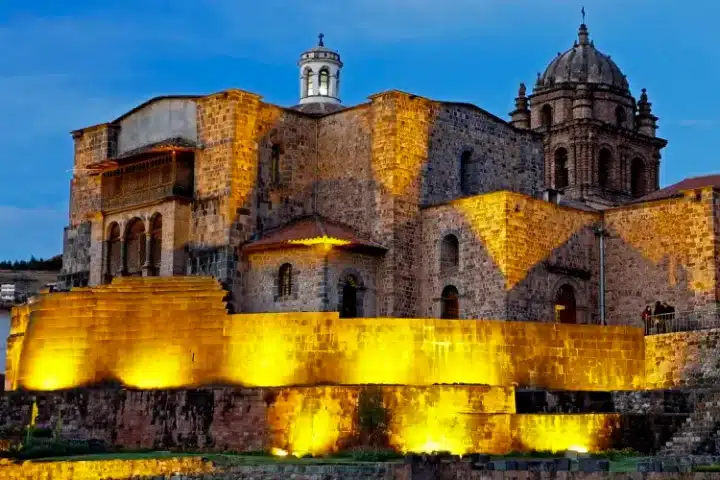
Qorikancha illuminated after sunset.
Ready to explore the Temple of the Sun for yourself? Start planning your visit today.
“
Plan Your Visit to Qorikancha?
If you are planning a trip to Cusco and would like personalized travel advice, our team can help you organize your itinerary and make the most of your experience. Contact us at booking@conde.travel or via WhatsApp at +51 940 064 463 for updated travel information, local recommendations, and assistance planning your visit to Qorikancha, the Sacred Valley, and Machu Picchu.”